Showing posts with label Quote. Show all posts

18 September 2012

Taxi zum Klo

"You see, I like men. I'm thirty and a teacher by profession. Otherwise I'm your normal, jaded, neurotic, polymorphously perverse teacher. I radically separate my job from my private life and pleasures."
Frank Ripploh directs himself in Taxi zum Klo, a confessional autobiography.
It's like Half-Nelson if Half-Nelson was about sex not drugs, and if it'd been directed by the I Am Curious (Yellow) director.
The density of Ripploh's admissions -- the extent of his insight into himself -- creates cohesive and lush textures and vibrant emotions and
light, poetic details. It's like if Weekend had been made by the Little Fugitive people and this was one person.

This movie has most of my fav qualities, it's: earnest, candid, humorous, warm, curious, passionate, creative.
Lots of sex. Gay sex. Ripploh is a gay swinger -- I care about judging this lifestyle about as much as he does. Which is not at all. There's a no-limits feeling, like Ripploh is willing to expose every part of himself. This Is How I Am Human, without barriers. In America right now we have people like Lena Dunham and Judd Apatow who make movies that are admissions of normalcy, and I think they do the same kind of thing, except they tend to take me places I've already been. Their narratives are kind of boring I think. Their lives are kind of boring I guess, it doesn't seem like they try to enlarge one's perspective of the world, it seems like they accept the world as it is and try to be mellow and not piss anyone off. I don't know, maybe they should try to shake things up a bit some time, maybe, I don't know. Just saying I'd rather hang out with Ripploh.
 Just saying.
 The fact that he's a teacher doesn't scare me. All people are horrible and some of them have to be teachers also -- I don't think Ripploh is particularly horrible and I don't think he "corrupts" the children. If my nieces had a teacher like Ripploh they'd be cooler, probably. They're pretty cool I'm just saying.
Ripploh can kick it with people who don't share his lifestyle. He's comfortable being himself and lacks obvious insecurities about his character or his sexual orientation. That's cool.
Ripploh reminds me of Portland. He reminds me of infinite possibility. He reminds me there's no mold -- and reminds me that those who ignore the molds are most interesting. He reminds me to be myself as much as fucking possible. He, I guess, helps me with my memory. His art is the type that connects with my sense of self and encourages me to expand and be fearless and honest and adventurous.
Good movie :)

20 July 2012

Chilly Scenes of Winter

"Why would you choose someone who loves you too little over someone who loves you too much?"
CHILLY SCENES OF WINTER
a fizzling romance drama from 1979
directed by Joan Micklin Silver
 Suspect I would've preferred the 1976 novel Chilly Scenes of Winter by Ann Beattie to this 1979 movie directed by Joan Micklin Silver. This story of a man who becomes frantically and neurotically obsessed with a woman suffers from a kind of gloomy, sticky intensity; the result of neurotic excretions and a tendency to emphasize, tonally and thematically, the neuroses. Realworld neurotics orbit their fears around dramatically rich specifics that appeal to creative types as enhanceable details.

The match-up is corny, tedious, obvious. The method is common to movie narratives because movies tend to limit their tonal palettes, while novels tend to have more textures and perspectives. Not all movies do this and not all novels do that, but in my opinion, the first step toward making a boring movie is limiting your tonal palette. I believe a movie narrative should be like knocked over beer dripping from the edge of a table. I can think of at least a handful of neurotic, obsessive, male-centered romance movies from the 70s and 80s, and they're all damaged by a sweaty-palm nervousness.

So we're all on the same page, this is my personal definition of neurosis:

neurosis |n(y)oŏˈrōsis|
noun ( pl. -ses |-ˌsēz|)
mental incapacity to be mellow, for more than
like two seconds

Charles (John Heard) romances co-worker Laura (Mary Beth Hurt), his affection for her as immediate as his attraction. She's six weeks into a marriage separation

"If I make you feel terrific will you marry me?"

Charles swiftly angles for Laura to move in with him, which she does. He adores her. She's everything he wants. She's unsure. While living together, Charles begins to worry there's a problem with the relationship, and hounds Laura with needy insecure questions, and by worrying creates a problem.

The love Charles has isn't the same kind of love Laura seems to be looking for, or rather, Laura isn't sure what she's looking for and wants space to decide, but Charles crowds her because he's so sure.

The relationship lasted two months and occurred before the movie's narrative.

Laura returned to her husband.

The relationship is told through flashbacks, and the narrative takes place a year after the break up, when Charles begins to act on his longing for Laura.

He breaks a long radio silence, by calling Laura and asking to see her. Before the call, he promises himself not to beg.

She agrees to see him.

Seeing her makes him desperate to have her again.

The movie excels when it handles character emotions with tender earnestness. One can sense the flames of desire between Charles and Laura, and sense his fevered passion, and her earnest confusion. My fav thing about the narrative is how it renders a compassionate portrait of romantic despair.

The melodramatically suicidal mother of Charles is probs my fav character.
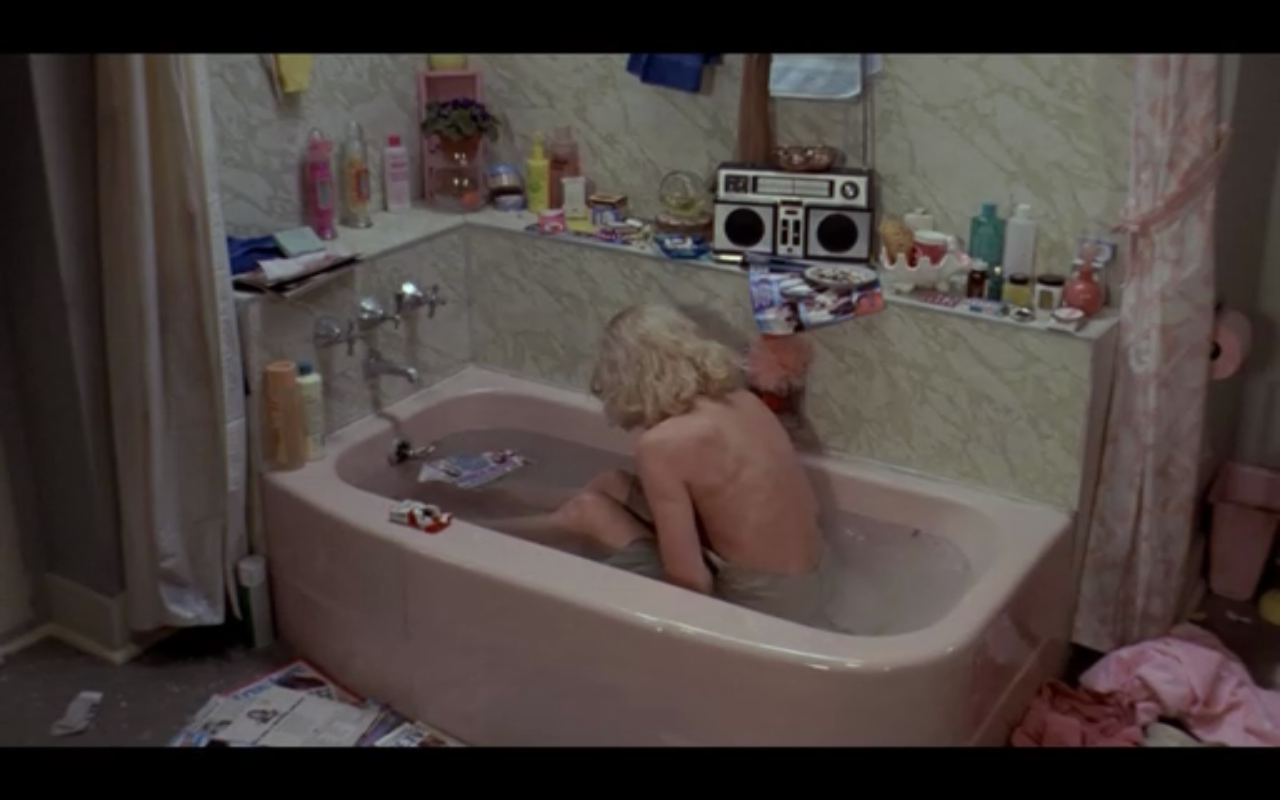
"I think one day she just decided to go nuts because it's easier that way. That way she can lie around in the bathtub, and say whatever she wants, and hit the scotch whenever she feels like it, and just not do anything. Sort of tempting, isn't it?"

I like the mother's excessive mania, which though it instigates drama, doesn't seem to seek or mean to create drama. Charles is an emotional tornado, his mother is the storm in the clouds.

"Susan. Susan always appears to be happy and normal. She must know something."

(this next section discusses the movie's ending)

According to Matthew 1: 6-11,
"The movie was first released under the title Head Over Heels to avoid the dreary connotations of 'chilly' and 'winter.' Director Joan Micklin Silver, with the studio's encouragement, also opted for an upbeat, optimistic ending that was faithful in spirit to the fadeout of Beattie's novel. But none of this helped the film find an audience and the reviewers who compared it unfavorably to Annie Hall (1977), Woody Allen's equally quirky comedy-romance, didn't help either. So Head Over Heels was shelved until UA's Classic division came along and decided to give it another chance in 1982."

in '82 the movie was rereleased with the Chilly Scenes of Winter title, and according to Matthew 2:2 
"The distributor also removed the original happy ending and substituted an alternate one which was more downbeat but true to the film's melancholy tone and wintry look."

The version I saw was the '82 version. I'd like to see the original.

19 July 2012

Punching the Clown

Faced with several attractive possibilities for Netflix streaming, but overloaded on conflicting reasons for watching each one, I instead decided to watch a completely random movie I'd never heard of and knew nothing about. Typical to this situation, the Netflix image for the movie was a deciding factor:
The randomness of my choice, as opposed to the deliberateness of selecting one 'for my mood' or based on expectations, combined with the interesting poster (complete with laurels), and the positivity expressed by the swath of reviews I sampled, compelled me to watch Punching the Clown. Sometimes this method burns me and wastes my time, but I was lucky enough this time that it paid off.

Henry Phillips plays a fictional version of himself in a movie he co-wrote with director Gregori Viens. Henry is a comedian/musician large enough to have his name listed in Wikipedia, and small enough that the link doesn't lead to a page (red font = no link):
and that seems like a pretty good introduction to Henry. In the movie he's decided to give his industry career a chance to blossom by moving to LA and sleeping on his brother's couch. His brother, Matt (Matthew Walker), is an actor who, when not auditioning for Hot Pocket commercials, dresses as Batman for children's parties.
Not actually a photo of Matt, this is Henry in Matt's costume. Matt is a balding redhead with a goatee and jangly teeth (I assume that's how he likes to be described)

Matt: Carrie left me.
Henry: Aw shit man. Just like that huh?
Matt: Well we had a pretty big fight, and I'll spare you all the gory details, but I thought it would be a good idea to make up, so I sent her a singing telegram. Then she fucked the singing telegram guy.

The movie does a good job of rerouting typical situations into humorous variants. The narrative works by surprise, coincidence, misunderstanding, etc punchline betrayals of audience expectations. His lyrical humor functions this way as well, by employing creative wordplay; because of this, his songs work best the first time you hear them (I wonder if the movie would be like that too, cinematically it's unimpressive).
The movie's LA feels unprocessed and realistic (it's shot 'documentary style'). There's often a satirical view of LA milieu and its tendency for small-talk charged with business overtones. Other LA topics explored are personal voice vs marketing image, power vs perception of power, public appearances vs reality, etc social dimensions common to the entertainment industry.

A thing I liked about Punching the Clown is Henry doesn't possess an LA personality. Henry seems genuinely unfazed by the gloss and glamor of the city, uninterested in adapting to its business models. He hopes to remain himself and obtain the modest goal of financial success. In this way the movie is about the enduring artistic struggle to retain one's integrity and intentions in the business of art. This makes the movie the least-LA LA movie I've seen in a long, long time.

I don't think Henry places himself above LA, I think he's likable for his skill at deflating the ego of LA while cracking into his own persona. It's not at all a story about a rise to success, or even overlooked genius. Just some crummy and relatable semi-miserableness. He pokes fun at his plight by performing a blues song that's about being out of blues, because his life isn't so bad. The movie's dry humor compliments its vague dreariness, and it's consistently funny and interesting.

17 July 2012

She Done Him Wrong ('33)

"Listen, when women go wrong, men go right after them."
SHE DONE HIM WRONG
a pre-code saloon-set romantic comedy
directed by Lowell Sherman

 "You know I, I always did like a man in a uniform. And that one fits you grand. Why don't you come up sometime and see me. I'm home every evening."

Talk about She Done Him Wrong is talk about Lady Lou (Mae West) dominating the screen. Liking her is the same as liking the movie. It's not the mere fact that she's the main character, it's that her behavior and attitude captivate beyond the normal. She's to this movie what Tom Power (James Cagney) is to The Public Enemy. She's a sex gangster.

The movie could be played in science museums under the title MAE WEST: FORCE OF NATURE. She'd double-feature with tornados.

The setting is New York, Bowery, in the 1890s: Lou sings in a saloon owned by her benefactor Gus (Noah Beery), whose charming Russian partner Sergei (Gilbert Roland) shows romantic interest in Lou. An unscrupulous sexual and business rival of Gus's, Dan (David Landau), haunts the saloon, desperate to win Lou's affections.


The saloon's atmosphere envelops the movie, it's portrayed from: Lou's bedroom, the bar area, the back-alley, and the stage; most of the movie's action takes place in the building. It's a late-early entry for cinematographer Charles Lang, who would go on to shoot many more movies, including Ace in the Hole, One-Eyed Jacks, How the West Was Won, The Magnificent Seven, and Some Like it Hot. Here the camera feels wooden and flat. It's missing dynamism.

 The script, noted for Lou's crackling repartee and bawdy double entendres, is a censor-lightened version of West's play Diamond Lil. It may be no small coincidence that in 1934, the year after this movie's release, Hollywood instituted the production code. 

Director Lowell Sherman began his career as an actor. He directed thirteen features, sometimes directing himself. If he was of any use to West and Grant I'm not sure, but he was of no use to cinema (here).

Chick: "You'd sell your heart and lungs for a handful of diamonds, and I'm doing a stretch with the rats and the bugs so you can have them."
Ex-squeeze Chick (Owen Moore) does time for the robbery of diamonds meant for Lou. He's okay with the stretch if Lou's waiting for him, but has crazy suspicions she's being 'unfaithful.'

Sergei: "See, they make your eyes sparkle. And your teeth clean like pearls. Oh you are beautiful. I love you so. The men of my country go wild about women with yellow hair."
Lou: "I'm glad you told me, I want to keep straight on my geography."
Sergei: "I love you. You were made for love, and for love only should you care. And now surely you have enough diamonds."
Lou: "Oooh. Diamonds is my career."
Sergei: "I swear I shall make you happy. I shall die to make you happy."
Lou: "Aaii, but you wouldn't be much use to me dead."

She's the sun of this sexual galaxy. Often her costumes, by a young Edith Head, sparkle. Although dress and body fashions have shifted since the 30's, and social attitudes and behaviors have changed, Lou still literally sparkles. And it's not so much the diamonds and fancy hairstyles and dresses that are magnetic, but the self-confidence Lou radiates.

Captain Cummings: "Well they're wonderful. But they always seem so cold to me. They have no warmth, no soul. I'm sorry you think more of your diamonds than you do of your soul."
Lou: "Well, I'm sorry you think more of my soul than you do of my diamonds. (laugh) Maybe I ain't got no soul."

 Lou wants to fuck the virtuous Captain Cummings (Cary Grant). He's the one she can't have, so the one she wants most of all.

When Chick breaks out of jail he makes his way to Lou,

throws an abusive hissy fit

and pleads for her to run away with him.

And he's only one of her problems. Gus and his partners, to Lou's surprise, are involved in illegal activities, and a federal agent codename The Hawk is after them. Worse, Lou murders Sergei's lover in a fight over a knife.
Combing the hair of her murder victim
Her life on the brink of chaos, the walls closing in, it takes the man with the right kind of love to end Lou's troubles.

12 July 2012

Cocaine: One Man's Seduction

"We don't make love for a couple of days and you got me ready for the funny farm."
COCAINE: ONE MAN'S SEDUCTION
a made-for-tv movie from 1983
directed by Paul Wendkos
A cocaine melodrama about a suburban middle-class middle-aged real estate agent in his declining years who kicks his booze habit with some sweetass cocaine. James Spader is his teenaged son and Jeffrey Tambor is his friend who shares a coke history.
 
The coolest thing about this movie is it scissors reality into fantastically emotional and poignant melodramatic shapes. I think melodrama uses hyperreality to create an experience that by its intensity is meant to convey certain emotional realities, to "seek something in hyperbole which otherwise might not be reached," as Gass said. Sometimes when you see a movie about a situation it can be like, hard to feel what they feel, and I think melodramas search for ways to depict interior realities.
A funny personal story is I watched this movie thinking Karel Reisz had directed it, because I'd been considering watching a Reisz movie at the same time I was considering this movie. I probably would've even told someone Reisz directed this movie if I hadn't written this and gone to IMDb to fact check. Paul Wendkos directed this movie and apparently over a hundred other tv episodes and tv movies, along with what looks like a handful of theatrical releases. I feel like if they still made tv movies like this I might watch them. But it makes sense this was directed by a tv director, it felt like a tv movie if I'm being honest.
Boss: "Eddie, it's bleeding, your nose."
(Eddie wipes nose)
Boss: "I'm sure Eddie didn't realize --"
Eddie: "Hey! Don't tell me I didn't realize. It's infected. Anybody'll tell you that. Any doctor will tell you that. It could happen to anybody. (to clients) What the hell are you looking at?"
For a while Eddie feels like God in that way cocaine makes people feel like God, and I think the movie does a good job of capturing the Godlike feeling (i.e. there's a helicopter shot). At first it's increased energy and renewed belief in oneself etc., but of course it turns south, and when it goes south, it goes all the way south.
Eddie travels to his buddy's house for a promised prep-snort before a crucial business meeting (Eddie flushed his own ounce during a bathroom mishap!), but his buddy's lady relays news that the buddy was arrested and is jailbound and she asks Eddie to leave she wants to be alone but Eddie won't leave and Eddie charges into the place and becomes angry and physical and ransacks the place searching for cocaine oh buddy oh buddy.
Then, when he gets the cocaine (out of a trashcan -- p, thetic), shit hits the mother fucking fan. Eddie suffers a paranoid freakout that segues into a hospital-severe o.d.
This, understandably, shreds the souls of hotass young Spader and his movie mommy. In the end Eddie learns an easy lesson the hard way -- all you can do is accept that life gets a little crappier as you age and your family is stupid and you aren't the success you wanted to be.

I liked this movie, I can't tell if I'm making fun of it or not. I liked it. Nine thumbs up.

10 July 2012

Be Yourself! ('30)

"Say, if he can sue me for what I did to him in the cafe,
they can send me to the chair for what I'll do to him in the ring. Hohohoho. Ahahahaha."
BE YOURSELF!
a boxing melodrama musical comedy from 1930
directed by Thornton Freeland
A goodhearted and successful nightclub singer volunteers her lawyering younger brother as the boxing manager of her nightclub-regular alcoholic knuckleheaded crush.
The movie is their quest to transform him from the belly-up boozing loser he is today, into the world boxing champion they know he can be tomorrow. The multi-limbed movie throws constant entertainment punches. For example, Fannie Field (Fanny Brice) listens with her gal pals to her beau's bout on the radio at her club,
is pulled away for a musical number,
and returns to the dressing room to hear the end of the boxing match on the radio,
which is intercut with her personal victory in a fight in the dressing room.
The second film from director Thornton Freeland, who went on to direct 24 more movies before retiring in 1949. None of his movies are particularly famous. This is a rare screen presence for Broadway sensation Fanny Brice, who was the subject of the Barbra Streisand movie Funny Girl and its sequel Funny Lady.
The movie's boxing scenes are silly in a regular silly way. Boxing isn't taken very seriously.
The night club performances are silly in an awesome way.
One stand-out sequence involves a devil-on-stilts, a bunch of backup dancers, Fannie behind a towering podium,
and a little movie magic.
 
F. U. N. "Serious" obstacles, like alcoholism and boy stealing, aren't investigated or developed in a way that leads to revelation or insight; these things are temporary and included to keep things forward traveling and to give the protagonists more victories.
 
They're punctuations in the story, little cheap thrills meant to seduce an audience. This is around the beginning of the Great Depression. It's commonly accepted that people's lives were horrible and bleak enough off-screen at that time, and gloomy material wasn't necessary on-screen. Like, life was horrible, let it be great in one place: the silver screen. I like these movies not only because people wear sweaters with boats on them,
but also because they offer porthole views into the world of the 30s, their clubs and art,

child entertainers,
and this feeling that everything, all misery and everything else,
can be danced away.