Showing posts with label 70s. Show all posts

20 July 2012

Chilly Scenes of Winter

"Why would you choose someone who loves you too little over someone who loves you too much?"
CHILLY SCENES OF WINTER
a fizzling romance drama from 1979
directed by Joan Micklin Silver
 Suspect I would've preferred the 1976 novel Chilly Scenes of Winter by Ann Beattie to this 1979 movie directed by Joan Micklin Silver. This story of a man who becomes frantically and neurotically obsessed with a woman suffers from a kind of gloomy, sticky intensity; the result of neurotic excretions and a tendency to emphasize, tonally and thematically, the neuroses. Realworld neurotics orbit their fears around dramatically rich specifics that appeal to creative types as enhanceable details.

The match-up is corny, tedious, obvious. The method is common to movie narratives because movies tend to limit their tonal palettes, while novels tend to have more textures and perspectives. Not all movies do this and not all novels do that, but in my opinion, the first step toward making a boring movie is limiting your tonal palette. I believe a movie narrative should be like knocked over beer dripping from the edge of a table. I can think of at least a handful of neurotic, obsessive, male-centered romance movies from the 70s and 80s, and they're all damaged by a sweaty-palm nervousness.

So we're all on the same page, this is my personal definition of neurosis:

neurosis |n(y)oŏˈrōsis|
noun ( pl. -ses |-ˌsēz|)
mental incapacity to be mellow, for more than
like two seconds

Charles (John Heard) romances co-worker Laura (Mary Beth Hurt), his affection for her as immediate as his attraction. She's six weeks into a marriage separation

"If I make you feel terrific will you marry me?"

Charles swiftly angles for Laura to move in with him, which she does. He adores her. She's everything he wants. She's unsure. While living together, Charles begins to worry there's a problem with the relationship, and hounds Laura with needy insecure questions, and by worrying creates a problem.

The love Charles has isn't the same kind of love Laura seems to be looking for, or rather, Laura isn't sure what she's looking for and wants space to decide, but Charles crowds her because he's so sure.

The relationship lasted two months and occurred before the movie's narrative.

Laura returned to her husband.

The relationship is told through flashbacks, and the narrative takes place a year after the break up, when Charles begins to act on his longing for Laura.

He breaks a long radio silence, by calling Laura and asking to see her. Before the call, he promises himself not to beg.

She agrees to see him.

Seeing her makes him desperate to have her again.

The movie excels when it handles character emotions with tender earnestness. One can sense the flames of desire between Charles and Laura, and sense his fevered passion, and her earnest confusion. My fav thing about the narrative is how it renders a compassionate portrait of romantic despair.

The melodramatically suicidal mother of Charles is probs my fav character.
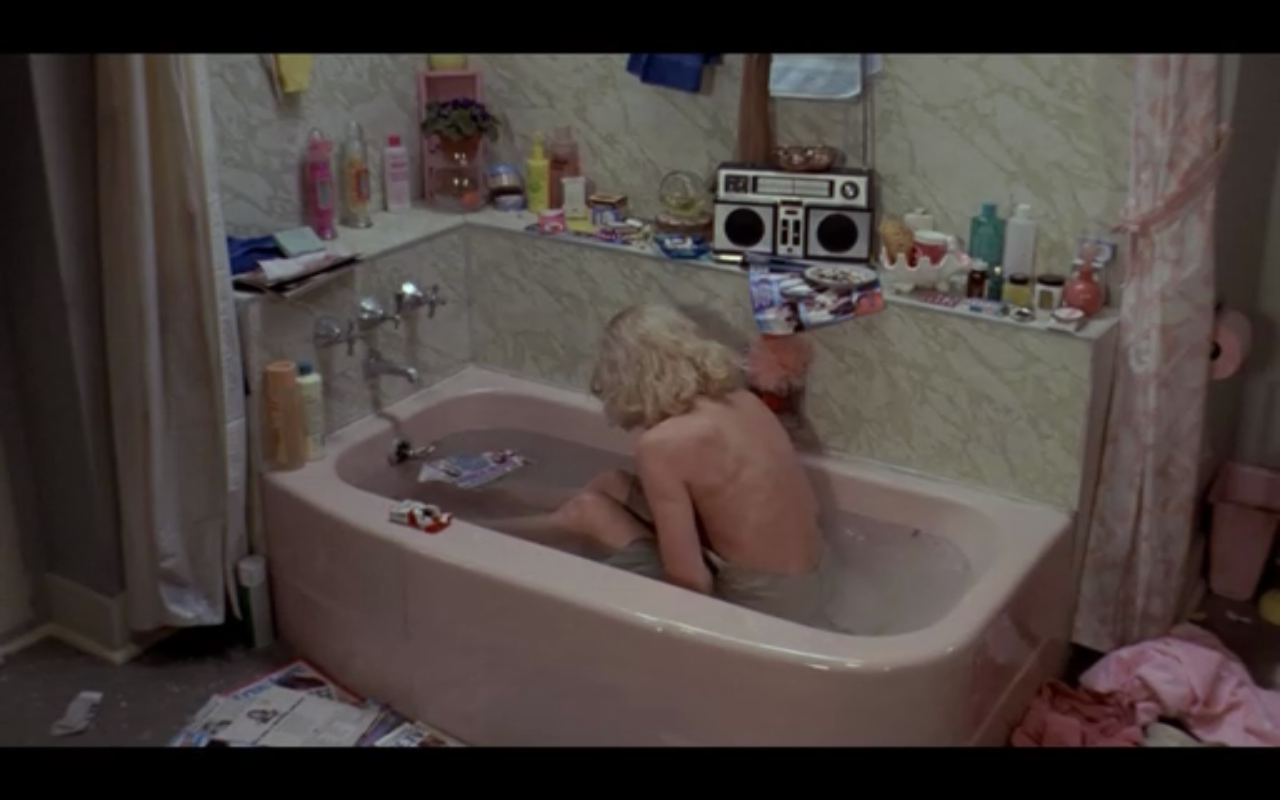
"I think one day she just decided to go nuts because it's easier that way. That way she can lie around in the bathtub, and say whatever she wants, and hit the scotch whenever she feels like it, and just not do anything. Sort of tempting, isn't it?"

I like the mother's excessive mania, which though it instigates drama, doesn't seem to seek or mean to create drama. Charles is an emotional tornado, his mother is the storm in the clouds.

"Susan. Susan always appears to be happy and normal. She must know something."

(this next section discusses the movie's ending)

According to Matthew 1: 6-11,
"The movie was first released under the title Head Over Heels to avoid the dreary connotations of 'chilly' and 'winter.' Director Joan Micklin Silver, with the studio's encouragement, also opted for an upbeat, optimistic ending that was faithful in spirit to the fadeout of Beattie's novel. But none of this helped the film find an audience and the reviewers who compared it unfavorably to Annie Hall (1977), Woody Allen's equally quirky comedy-romance, didn't help either. So Head Over Heels was shelved until UA's Classic division came along and decided to give it another chance in 1982."

in '82 the movie was rereleased with the Chilly Scenes of Winter title, and according to Matthew 2:2 
"The distributor also removed the original happy ending and substituted an alternate one which was more downbeat but true to the film's melancholy tone and wintry look."

The version I saw was the '82 version. I'd like to see the original.

16 July 2012

Born to Win ('71)

It was this shot in particular that made me sit up and pay attention to Born to Win. Something about the fact that I immediately realized J (George Segal) couldn't enter Lauren Bacall's Applause (on the marquee in background), and Lauren Bacall couldn't enter George Segal's Born to Win. Born to Win is in some ways dissimilar from typical movies, because its structure and rhythm and aesthetics attempt to use cinema to come near reality, rather than create a special and artificial movie reality. There was sometimes a slight tension between reality and art: throughout the movie clever details made moments interesting and memorable, like when J hides from a cop in a drying machine and the cop figures it out and turns the machine on,
when J is locked in a room by some drug thugs and attempts to get the girl across the street to call the cops through flashing his genitals by opening and closing the lady's nightgown he's incongruously wearing due to his situation,
when the elevator door keeps trying to close during a dramatic scene,
the colors of the closing credits,
and an earlier moment wherein Parm (Karen Black) kisses J's heroin tracks. I've always felt kissing heroin tracks is the most romantic thing possible.
Tell you the truth, I have all sorts of problems with J and Parm's relationship. I think it's a relationship that's filmpossible, which is a word I created right now that combines 'impossible' with 'film' to denote a thing that could only happen if some filmmaker or filmwriter made it happen. The situation wherein J and Parm meet: she approaches a car he's stealing and asks for a ride, he agrees to give her a ride, it's revealed it's her car, they go to her house, she's very flirty and immediately head-over-heels, they make love etc. I guess maybe things like that happened in '71, maybe there was a more relaxed attitude about relationships and hooking up, but it was difficult for me to care about a relationship that happened so randomly and sustained itself not only for no good reason but even sustained itself despite the fact that J has a couple character flaws. It's like, if you're going for realism, why do that.
When the romance worked it was by sheer perseverance, like on their car trip when they ask each other for kisses, and he says he feels like he's a teenager and he says he likes feeling like a teenager, and he orally stimulates her sexual organs while she drives and recites a nursery rhyme.
Their trip takes them to the beach, and if there was ever a perfect movie to have a scene on a beach with grey skies, it was this movie about the ex-hairdresser (did I forget to mention?) heroin junky who takes his free-spirited gf to the beach.
The movie was Ivan Passer's second directorial effort. He made his name in Czech in the mid-60s, writing on Loves of a Blonde and The Fireman's Ball for fellow Czech moviemaker Milos Forman. Of his own films, Cutter's Way seems most famous. His most recent was 2005's Nomad: The Warrior, which appears to be one of those giant historical epics.
The relationship I thought was well-developed was J's relationship with drugs, which seemed all-consuming, and also I liked his friendship with Little Davey (Tim Pelt). They have misadventures trying to score their next fix, and are kind of sweet to each other.
Even though charismatic J has "Born to Win" tattooed on his arm, he has all kinds of bad luck during the movie. It's hard to be a destitute heroin junkie, cops always after you (including Robert De Niro), trying to get paid, do the thing that'll bring the next fix, etc.

30 January 2012

Sugar Hill ('74)!

Valentine: You know it's strange, after you and I split, it took a long time to get over the fact that you took up with Langston.
Diana: Yeah, but you got over it all right.
Valentine: In any case, I never thought I'd be questioning you about his death.
Diana: Murder. First time I met him was right here. He came up to me and he asked my name. It's Diana Hill I said. He said, well from now on you're gonna be called Sugar, Miss Sugar, 'cause you look as sweet as sugar tastes.


Sugar Hill is a blacksploitation Voodoo black magic crime action film from the mid-70s.


Diana 'Sugar' Hill (above) wants to sell her soul to the greatest of Voodoo gods, Baron Samedi (first photo), to avenge her boyfriend, Langston, who was murdered by a honky crime syndicate that wants control of his night club.


Baron: Tell me, why do you want my power?
Sugar: There are some men I want punished.
Baron: Punished?
Sugar: DEAD.

The screenplay was by prolific playwright Tim Kelly, who wrote over three hundred plays before he died at 61. It is the sole directorial credit for Paul Maslansky, producer of over thirty films, including the Police Academy films, Cop and a Half, Raw Meat, Circle of Iron, and Damnation Alley. Star Marki Bey had a short career that began with a role in Hal Ashby's first film The Landlord.


O'Brien: You're not going to do anything crazy, are you?
Sugar: You mean like I did to Tank?
O'Brien: Tha-that was you? I don't believe it.


Sugar: You're about to become a believer.

Slave shackles are used as Jujus (Voodoo charms) to resurrect a zombie murder gang of living dead slaves brought from Guinea to America in the 1840s. Sugar, Baron Samedi, and the living dead slave gang kill off the members of the honky crime syndicate one at a time.

There's a bar fight between Sugar and a blonde lady that begins with a bunch of slaps.


I have described the essential elements of the movie Sugar Hill.

21 January 2012

Frank Zappa's 200 Motels

I clocked 200 Motels being creative at 400 mph.


My gun only registers speeds up to 400 mph!


200 Motels is maxed out, a densely creative and energetic piece of cinema. I've seen it twice now and still don't know all its moves, its curves, its innards.


Lonesome Cowboy Burt: Fine, you can brief me as long as you want, as long as you can tell me two things.
Rance Muhammitz: I know, when do we get paid --
Burt: No, I wanna know where is that waitress --
Muhammitz: Uh-huh, waitress --
Burt: And if she comes in this place, will she sit on my face, and loan me a couple bucks until the end of the week.
Muhammitz: Couple of bucks --
Burt: Heh heh --
Muhammitz: End of the week ... week ending, the week ending, what, what's that, what's the date?
Burt: Uhh, Tuesday was the 5th, uhhh, Monday was the 3rd. Make that out for Sunday --
Muhammitz: Ah ah ah -- don't say Sunday.
Burt: What's wrong with Sunday? The Lord's day.
Muhammitz: Ah ah ah --
Burt: A day of rest. Just make that sucker out for the 23rd of March, would ya?

(it should be noted that the quoted scene involves a toy machine gun and a man dressed as a general and a man dressed as a cowboy).


The movie, the first filmed on video, seems like it has no rules, no objectives. Maybe it was an excuse for the music, but as far as excuses go, this one is elaborate, fantastic, and magical.


It fulfills the promise of rock music via the medium of movies. It's a movie for people who want to explore their emotions through art, who want to travel to the anarchic limits of their imagination. If the movie sometimes goes too far, good, good for the movie for going too far, because who are the other filmmakers who are out that far, and doesn't someone got to be?


Mark Volman: The penis can be a very useful organ.
Howard Kaylan: Yeah, very exciting too, once you get to know me.
Crowd: Oh yeah, etc. (mumbles of approval).
Crowd in chorus: PENIS.
Groupie #2: It sounds so overwhelmingly medicinal.
Groupie #1: A penis sounds like something a doctor would have hanging off of him.
Groupie #2: None of the men I know and love in the rock and roll business got penises. They all got cocks or dicks at least.


Conventional and widespread criteria for evaluating a movie's success involves plot and character analysis. The goal is to decode the film's message, which audiences expect to be included, because cinema has become a didactic art form, evidenced by the plethora of children's television and movies, and too the arrangement of dramatic material within general mainstream adult films that treats an adult's mind like a child's. In a popular sense, movies have become an art form of hand holding, and by and large there's a shared DNA among the types of movie seen in the multiplex or rerun on television or imitated by television productions. If one is not careful, one could begin to believe there's a certain way a movie should be, a certain behavior that's suitable or characteristic for the art form.


200 Motel's riches are manifest, but not in what's become the traditional and ubiquitous sense of cinematic riches. 200 Motels is free from the shackles of plot and story, message and didacticism; the movie is a feeling - and a positive feeling! It's an experience of the joys of expansive personality and the thrills of adventurous hearts. It's silly, wacky, wild, and weird, yes, and also passionate, creative, and curious.

Note: 200 Motels was full frame in its original release.

17 January 2012

California Dreaming (1979)

"My brother Phil, he was always talking about the ocean, and how he'd like to be able to see the ocean and play his trumpet at the same time. So I thought if I could go where I could see the ocean, and play one of his recordings ---"


I like it when TT (Dennis Christopher) enjoys himself, like in the above photo, wherein a pretty blonde comes near him, and he smells her hair, and her breasts rub against him.


Breasts rubbing against TT make TT smile, and I like it when he smiles. He's come from Chi-Town and wants to live the California lifestyle. According to TT and the movie the California life involves volleyball, surfing, movies, making out with girls, and pure hanging out.

Seems pretty badass to me.

TT: Do you prefer extended foreplay or a more spontaneous coming together?
Corky: TT why do you always manage to say something ridiculous?
TT: I read too many books I - I think.
Corky: Well why don't you just be quiet for a while?

The movie has some character developments and narrative arcs and stuff, but I don't know why, those things make the California dream feel like an interchangeable backdrop for a formulaic drama. I prefer the movie when it's pure hang out, when it's about the sun hanging in the sky, the waves rolling on the beach, people laughing, etc., I like it when it feels like a California dream.

One character, Duke Slusarski (Seymour Cassel), brags about his exciting life all the time. Cool guy IMO, but some of the kids think he's full of bologna and are irritated by him. The movie does a mean thing to Duke. Its point is that the California dream can't sustain itself forever, but the film makes this point in several other ways too. I'm not sure the loudest expression of a point is necessarily the best or truest. I'm definitely sure that the thing the movie does to Duke doesn't make TT smile, and I like it when TT smiles.

If I made a movie titled California Dreaming it wouldn't end in the rain. It's like, why even want to dream then. I want to dream of escaping the rain, so that during the day I can think of my dream, and think that maybe the rain can be escaped. I think it's okay to make a movie about smiles. Seems okay to dream about a place of smiles.

25 August 2011

Kes vs. Terri

I woke up in today's early morning hours with a thought on my mind: it seems fair to compare and contrast Ken Loach's Kes with Azazel Jacobs's Terri. I terribly wanted to return to my sleep and consider the matter again at a later time, but I could not fall asleep again and remained restless. Similarities and dissimilarities kept popping into my mind, and the cinematic kinship seemed so urgent and important that I felt a little rush of excitement in even considering it, which was counterproductive to falling back asleep. I also could not pinpoint, to my satisfaction, the fundamental distinction.

Sorry, but I still don't have the answer.

Part of me thinks that Kes is a more authentic film because of its relaxed dramatic structure and use of more non- and semi-professional actors, but another part of me thinks I can't make this claim without having lived and breathed in its time and place, and also because the film has a lyrical and sometimes literary quality that prohibits it from being completely naturalistic. It's based on a book; adapted by the author, Barry Hines, with credited contributions by director Ken Loach and key collaborator and producer Tony Garnett.

In these two films filmic technique and thematic intention are intertwined - each necessary for the other's full shape. It doesn't seem fair, despite the use of more professional actors, to accuse Terri of being more artificial. Both films are composed of dramatic sequences, and though the sequences are breathing, and wish to capture the feeling of reality and being, the fact is that deliberate dramatic tools are used to achieve this, and I don't think in one film more than the other. Both films temper their dramatic forces with sprinkles of characters who and moments that represent oppositional or clarifying elaborations - part of a structural design that takes additional steps to avoid on-the-nose-ness. I won't give away specifics, but, to address crucial final moments, it's true that both films depict tribulations of powerful emotional importance that are achieved by film-long buildups to catastrophic moments.

Some characteristics that I considered are difficult to give relative values. I like that Kes is bereft of a sentimental love subplot, but I like that Terri includes a troubled, complicated love subplot. In my opinion, Billy Casper (David Bradley) from Kes is simply a more lively and interesting kid, his environment has more beauty, and training hawks is more captivating than killing rodents. But then, that's to say that Kes is really a film about sometimes escaping and always wanting to escape harsh conditions, and Terri is a film that meshes misery and hope. The components of Terri that are awful or boring or ugly are part of the film's chemistry, and to remove them would be to falsify, ruin. In Kes there is terribleness too, but the strength of Billy's spirit is so radiant, so like pure and gorgeous, that it's him we remember most of all. Does that mean Terri is the more honest film then, or does it mean that Kes is the better film, or does it mean something else or nothing at all?

09 July 2011

Vigilante Force (!)


Vigilante Force begins with some manic fucking hellraising. Within the one minute mark, while the credits are still rolling: guns are fired from the bed of a moving truck, a man is dragged down the length of a bar by another man in a cowboy hat, a high-heeled woman in a bikini dances on a pool table for cash money, a roulette wheel is spun, there is a bar fight which escalates to gun violence - and then all out pandemonium (guys being thrown onto tables and stuff), and for what appears to be completely unrelated reasons (unrelated to the bar fight) a man is thrown out a window in a coffee shop, followed by a police car being set on a fire (with a fucking torch) and shot at until it explodes.
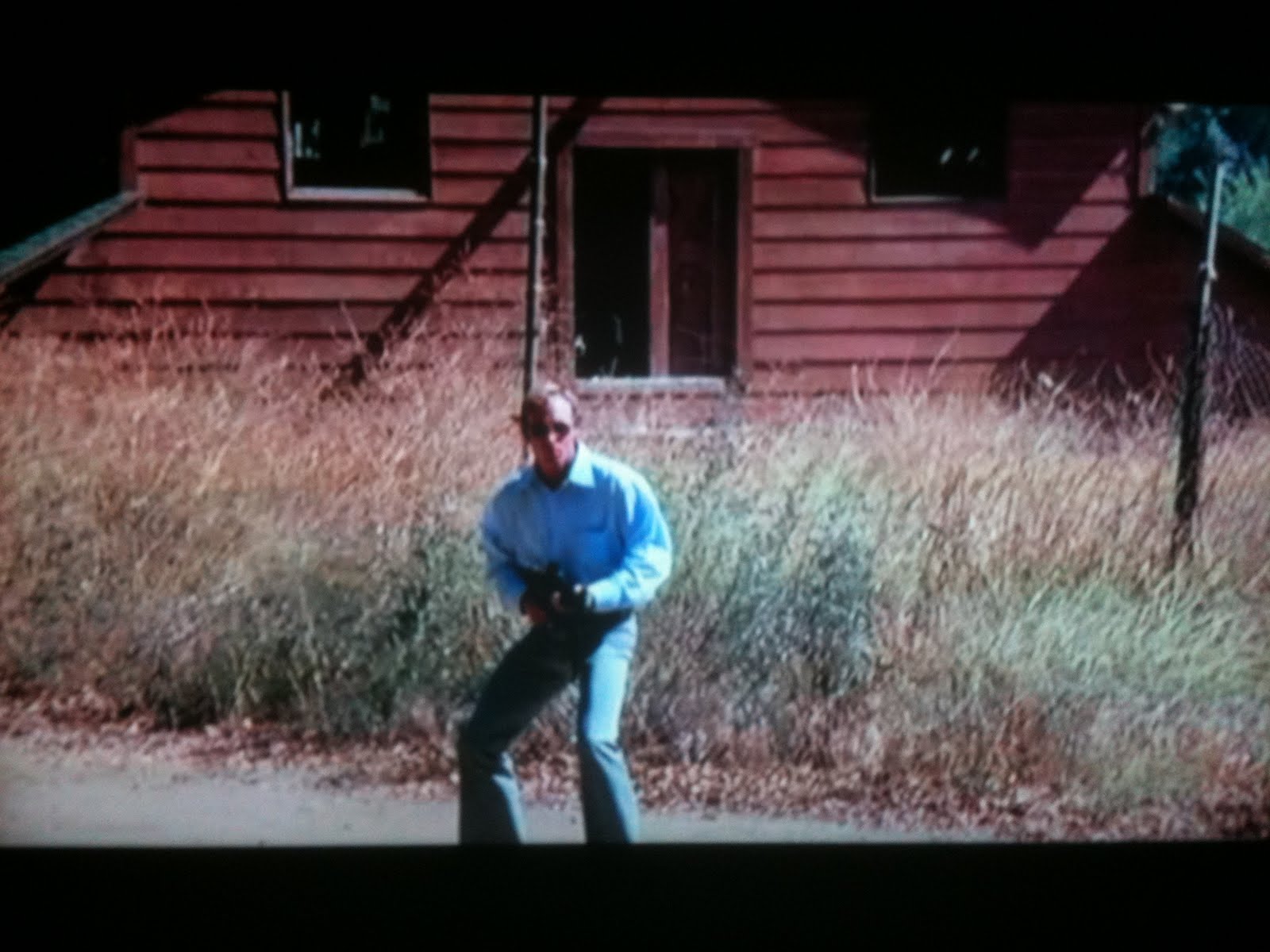
This is followed by an early morning robbery getaway sequence. Three men with guns, and either a woman accomplice, or a female hostage, flee to their car while exchanging bullets with the police. Two officers, and an elderly bystander, are shot.

The town is overrun by criminal behavior.

Residents don't feel safe walking down front street anymore. Harry, the sheriff, can't be everywhere at once. He's losing men. Ben Arnold (Jan-Michael Vincent), a young tractor salesman and local, has a Vietnam vet brother, a "genuine war hero," whom he offers to contact for auxiliary police protection.

Aaron Arnold (Kris Kristofferson) agrees to the arrangement on the condition that he can bring with him four friends, friends he promises are war vets and/or ex-police. They're sworn in and issued guns, badges, and handcuffs.

Vigilante Force was written and directed by George Armitage (Miami Blues), with production design by Jack Fisk. It was produced by Gene Corman and released by United Artists in 1976. Kris Kristofferson plays a softer, but not much softer, Kurt Russell type. He controls the criminal population in order to cheat the town himself, and the movie is about his betrayal of the trust offered to him.

This means a cycle of corruption, violent action, and town drama. It's my opinion that no one in the movie is interesting except Kristofferson as Aaron. But he's pretty interesting. The film first made me lose my shit when Aaron breaks up a cockfight by pistol shooting the roosters dead in front of the crowd of betters. "You're all under arrest" is his line.

The problem is Armitage doesn't make me care about anyone, so who gives a fuck about his outrageous, ridiculous southern anarchy narrative. It's tedious and drags itself through a slow middle half that's only punctured by Aaron shooting two roosters. Except, at the end, the movie take off. TAKES OFF. It's the end of the movie I want to describe, and part of the ending's charm when watching the film is its surprising pay offs, emphasis on surprise, and I don't recommend you read the next section or look at its pictures unless you've seen the movie. BUT I also recommend you do check out the next section, even if you haven't seen the movie, if your position is still that you don't think you should watch this movie, because you totally should.

THE END OF THE MOVIE


Evil Aaron and his evil friends disguise themselves as a marching band and intend to use their small arsenal to rob something I forget what.


Ben has assembled a vigilante group (earlier, around a pick-up truck, he'd been like, "I'm the one that brought you here, and I'm the one that's gonna run you out," to a topless Aaron, who'd been saying stuff like "Now you listen to me I didn't volunteer for this").


Ben tries yelling down some threats. There's a stand off. It's intense. Aaron tests Ben's seriousness.


Ben is very serious.


Hell breaks loose. It's insane. They just don't make pandemonium like they make pandemonium in the US south. Guns are fired, things explode, people are given hell, people take cover.


In one instance ...


a woman with a Molotov cocktail ...


throws the Molotov cocktail ...


at a man ...


whom she hits ...


who presumably dies a horrible, painful, fiery death.


The action heads to the nearby ghost town, where things are settled the only way these things can be settled.

06 June 2011

Deadhead Miles

Alan Arkin's Cooper is a playful and likable character who carries Deadhead Miles on his shoulders. A heavy burden for someone whose philosophical remarks are, for example:

"Yeah, I used to believe in Jesus. But then one night I wanted to make sure. I was getting this funny play in second gear, you know? So I took some clutch parts and I laid them under the rig and I went to sleep thinking, 'Okay, if you're Jesus you come on down, work on the clutch, maybe we talk a deal.' Next morning, all them clutch parts was gone and I was still getting that play in second gear."

This he says to Paul Benedict's Hitchhiker while Cecil B. DeMille's Samson and Delilah plays on the drive-in screen. He has what you might call Southern charm, very much like Kit it Badlands. The movie, infused with road scenery, snapshots of lifestyles and attitudes encountered en route, and always with folk music on the soundtrack, fits in its time. You could double-feature it with Schatzberg's Scarecrow.

The comedy is well-constructed and often works. Screenwriter Terrence Malick allows moments of curiosity (a woman tied to a stove by a long rope affixed to a belt around her waist), the supernatural (the legend of Johnny Mesquitero), the ridiculous, and zany. Cooper, again like Kit, stumbles through his unplanned and wayward journey with a large degree of indifference.

"You know, you're not going to believe this, but I saw Ethel Merman once at a state fair. In Kansas. 'Bout four years ago. She came out there, sang a song: four bars through it a hog, a hundred yards away, fell down dead on its side. I swear that's the God's truth."

At its best the film evokes the strangeness and absurdity of living and being human. The lack of a central theme sometimes causes the energy to dip. As the hitchhiker comments, "It's as interesting as you are interested."

27 January 2011

Alucarda


It's a rather straight path to the heart of Alucarda; it begins with a little bit of madness, a dying mother trusting a wild looking gypsy to deliver her newborn baby girl to a convent, and ends in total madness. The insanity of its closing moments would be terribly fun to describe, but if you've seen the movie you already know, and if you haven't seen it I wouldn't want to give it away.

"They used the most evil language I ever heard to recognize Satan as their lord and master."

Although clearly made by a serious devotee of horror mythology, its exact roots seem difficult to delineate. The grandmommy of them all, the novella Carmilla, is likely an influence, but the title is of course the feminine version of the backwards spelled Dracula, first used as the name of Dracula's son in 1943's Son of Dracula.

The director Juan López Moctezuma began in the theater. Early in his career he encountered, befriended, and collaborated with Alejandro Jodorowsky, working in producing roles on Fando y Lis and El Topo. The mania of Jodorowsky's films is present in Alucarda; the two filmmakers share a creative point of view of visual and thematic adventurousness. But then, the 70s were like that, weren't they?


"This is not an act of faith! This is the most primitive expression of ignorance I've ever seen!"

"Now, how can you explain this from your scientific point of view?"

There isn't much in the way of political subversiveness, at least compared to the extreme heights of other films' political subversiveness at the time. Moctezuma seems both critical and curious about religion; the film both attacks and sympathizes with the nuns and priests. It's interesting that the nuns are not dressed in traditional nun habits, but rather wrapped in white cloth almost like mummies. The whiteness of their strange clothes is, of course, perfect for soaking the red of blood.

There are a few moments of pure diabolical playfulness and bucolic bliss, but not to the extent of Séria's Don't Deliver Us From Evil. Moctezuma's agenda is to create a seriously sinister demonic possession movie, but his is more jubilant, sensational, and playful than Friedkin's brow-sweating and anti-everything The Exorcist. It's insane like Russell's The Devils, but doesn't make you feel insane yourself like that movie does.

Point is, Alucarda, despite its similarities and dissimilarities with other movies, is its own thing. The movie works as it is, and would work if those other movies didn't exist. Moctezuma's seriousness and passion win. When watching the movie the emotion which overrides all others is appreciation, an appreciation for cinematic form and the ability of filmmakers with talent and heart to enmesh the unrealities of fantastic cinema with the unrealities of the human spirit.

20 December 2010

Every Man for Himself.

The number of times I willingly saw a movie in its theatrical form in 2010 is a purely fact based interpretation of my favorite films of the year.  It approximates the range of my curiosity over the year:

Enter the Void, six times
Every Man for Himself, three times
Twice: The Long Day Closes, Lourdes, Bluebeard, Fish Tank, Scott Pilgrim vs. The World, Around a Small Mountain
Black Swan, 1.8 times

I wish the list was trashier; or I was trashier films had been better, trashier.  I fully intended to see Wild Grass again.  My favorite glimmers of underseen America were the pickup truck, barn, and front porch conferences of Winter's Bone, the portrayal of familial politics in The Fighter, the gardener in The Kids Are All Right, and all the brilliant nuances of Strongman and Sweetgrass.  My favorite food movie was Mid-August Lunch.

Every Man for Himself is what crazy narcissists yell in mortally dire situations.  The French title is Sauve qui peut (la vie), and it means something like save your own life or run for your life; one intertitle translated Save Your Ass.  It's sort of gravely humorous in its nakedness, but also desperate and shameless.

The viewer of Every Man is given minor navigation (the title and the intertitles [Imagination, Fear, Money, Music]) for a crooked course, and so is left to explore and discover the film without guide, to simply see and experience.  It's a film that revels in the microscopic and idiosyncratic, and forgoes traditional storytelling pathways in favor of spontaneity and resonance.  Like many of my favorite films, and the ones that make me most excited, my impulse is to describe the actions of the film, moment to moment, in order to avoid constructing a personal framework for the film.  The problem is such highly descriptive stories are hard to tell right, especially when important details lie in the photography and sound of the film.

Scenes directly engage my emotions and intelligence, with all the electricity of Jean-Luc Godard's passion and skill.  He develops earlier filmic impulses and methods, themes and techniques borrowed from his earlier self, but plots a new course, and asks more from his characters.  He is both more serious and playful - indeed, the first sequence of Paul Godard and the opera singer, and then him and the bellboy, are gut busters, hilarious ideas amplified by perfect execution.  Full moments collide with impressions (sometimes punctuated by slow motion) for a blossoming revelation of the three main characters; too, some moments are strangely unexpected, because the film is both about the characters and their experience. 

Different from objective, vérité inspired films, Every Man is cloaked with the beauty and agility of cinema, the hand of Godard ever present.  His foregrounded craftsmanship generates exciting textures, dynamic surfaces:  an office scene with Isabelle, another hooker, and two men becomes a surprising sex musical sequence.  It's difficult to say the center of the film is ideas (your ideas) and feelings (your feelings) and not name those ideas and feelings, which are varied, but it's enough for me to see that the characters also hopelessly orbit the meaning of their lives in the substance of their experiences.

14 October 2010

Scarecrow, Aloha Bobby and Rose, The Last American Hero, and Macon County Line.

Beginning with a rewatching of a personal favorite of mine, Straight Time, I began an impulsive streak of American film watching that both fascinated and exhausted me. It's low point was Wrong Turn 2: Dead End, of which I could not have a conversation without becoming violently offensive. If I must say something positive about it, I'd invoke a sentiment first expressed to me in a Ralph Ellison book, something about the closeness of hate and love in reference to specificity. Is it made-to-work or made-to-suck? It's made-to-suck. Compare to Adam Green's films, Hatchet and Frozen I watched, which are made-to-work.

The best theatrical moment in the rush was The Social Network. Fincher and Sorkin's movie leaves Pilgrim in the slow lane, as I like to say. For clarity, emotional accuracy, and dramatic speed, Social Network was fascinating. Another positive was Andrew Garfield, who then appeared in Romanek's Never Let Me Go (+ earlier in Gilliam's Parnassus). And that movie crushed me, as they like to say, with its tonal precision, emotional nearness, and vibrant vision. It's a beautiful movie, with sharp, natural colors, and subdued, steady expression. The meeting toward the end was my favorite scene from any film this year.

More distinctly, I also began a succession of American 70s films, ones with smaller legacies and followings, maybe you'd say second-tier American 70s films. I watched Jerry Schatzberg's Scarecrow, with Gene Hackman and Al Pacino, shot by Vilmos Zsignmond, co-winner of the 1973 Cannes Grand Prize (second-tier?). I mostly think of Pacino as intense (rewatched Carlito's Way recently - love the movie, but the problem is Carlito [Pacino] is the only compelling character in it), but here he's happy and easygoing, playful and kind. The movie is solely about the relationship between Pacino and Hackman's characters, and that relationship is exposed mainly through their contact with each other, the way they treat other, the way they behave, the way they speak and what they do. A pure-blooded character movie. Would've loved to have seen this in the theater.

Aloha, Bobby and Rose, with Paul Le Mat from Demme's Melvin and Howard! I was excited about this one. It's a dirty, sad, blue-collar 70s LA point of view on life and love, executed with the typical delusion and self-contempt of the period. Some filmmakers of the time veiled their films with illusory impartiality when depicting low-lives and deadbeats: authentic looking actors, naturalistic dialogue, regional atmosphere; yet so many of the films uniformly depict their lives as pathetic, irredeemable, and lost. Real people without real pain or joy. As a movie it has a few memorable moments, including an okay car crash, and I think someone orders ice cream, which I love in movies. And I think Elton John's Tiny Dancer is playing in the background! Would've loved to have seen this movie projected onto a white sheet in a friend's backyard.

The Last American Hero, with Jeff Bridges!, is a truly idiosyncratic movie, a totally American one that captures well some of the South's less exportable expressions of their famous virtues. Bridges has less room for personal expression and spontaneity in his performance than the actors in the previous movies because the script itself is more vocal about certain convictions. For example: Bridges plays the son of a moonshiner and becomes a Nascar champion, and it's titled The Last American Hero. I love it because Bridges never quite expresses his emotions yet somehow always does, he's always proving something. There's also a tremendously touching scene involving an office lady at a certain race track, who takes a personal interest in the drivers and follows them, supporting them, encouraging them, and sometimes sleeping with them. Sort of an office groupie. She's so sweet in this one bed scene it kills me. She tells a story of a horrible experience at an Atlanta frat party that involves ridicule and shame, and it's the most you learn about the character, so you don't really know who she wants to be, but once her party story is over, you know who she doesn't want to be. She doesn't want to be this person she once was. She isn't going back. It really worked for me. The moonshine and racing aspect and Bridges character were pretty interesting and easy to follow, though also formulaic, for example the same basic story is told in Robert Mitchum's earlier Thunder Road. Would've loved to have watched this one on a shitty tv in some third-rate hellhole hotel in the south, with a hooker, and pizza.

The films which brought me to the point of satiation were last night's Lee's Do The Right Thing (watched She's Gotta Have It earlier, a charming, wonderful movie) and this other 70s American movie set in the south, Macon County Line. It's at mid-point between Aloha, Bobby and Rose and The Last American Hero. Two Chicago brothers spend a few weeks joy riding through the south before Army duty, but by circumstance are involved in a gun battle with a local police officer. It's a homicidal misunderstanding. The film feels like a trip from Los Angeles to the south, and never manages to feel truly Southern, and it's never convincing, straight down to the father (police officer) and son relationship (although crucial for a late-movie moment), but it's always nearing something. For example: the brothers are supposed to be switchblade, hellbent Beach Boys, and that's fine in my book, but that's the most I learn about them, and so they remain only that. The craftsmanship in the final showdown moment is laudable, as is the payoff. Would've loved to have seen in it at a drive-in.

13 September 2010

Cría Cuervos.

At the drive-in of my heart, 3 Women and Cría Cuervos double-feature together, all the time. Their skeletal structures are similar, they have in common the 70s, auteurism, and female protagonists, and a dissection reveals the sharing of vital, essential characteristics. They the two movies are psychological dramas that obtain their narrative intensity through careful observation of minute, idiosyncratic behaviors of their central characters.

The lead in Cría Cuervos is Ana Torrent, the lead from Victor Erice's The Spirit of the Beehive. In Spirit she was seven, here she is ten (in real life). The layers of the narrative are draped over her performance. I've always respected the precocity, energy, and commitment in Natalie Portman's Léon The Professional performance, but she's stagey, histrionic, and vociferous compared to Torrent. I'd call Ana Torrent the little girl James Dean, but she's better than James Dean. She possesses the magic light of a secret, like all truly great actors. The presence of so many of the complexities of childhood depend on the nuances of her performance, and the believability and verisimilitude of these films are partially a product of her strengths.


Physically, Torrent is virtually the same in both movies. She's a girl with tremendous eyes, pretty short. Her emotional range crosses frequently into adult territories (her favorite movie is Frankenstein, she's an attempted murderer), though doesn't stray far from archetypal childhood characteristics (her innocence and compassion, her playfulness - she literally plays).

Unlike other child actors who are written roles in which they 'perform' as children, Torrent is given the chance in Cría Cuervos to behave like a child. When the housekeeper tells the story of the local girl who claimed a virgin pregnancy, Torrent admits she doesn't understand anything being talked about. Only a child could somehow earnestly issue multiple death threats without moral consequence. The narrative works so well because it simply asks Torrent to absorb, to experience, and to encounter, like all children, with a child's limited knowledge of the details and intricacies of adult relationships. She isn't meant to grasp certain social or age related components of the story, and anyway her journey is a deeper one, into the nexus of the soul.

Torrent confronts the death of her mother, followed by her father. She naturally assumes her father died from a poison she herself had stirred into his milk. It was a vendetta for her mother. A question is: will she kill again? Would she just kill everyone whom she doesn't like? Though it isn't a movie about a killer, it's a movie about a little girl, and a single girl, not 'all little girls.' Her psychological make-up is specific to her and her experiences. Some of her actions reflect the behaviors of her parents, there's a clear outline of a person, and she has a multi-dimensional personality.

The film is remarkably well-written. It's told nonlinearly and with dreamlike emphasis; it's written from Torrent's emotional point of view. The exterior portions are vastly interesting themselves. Following her father's death, her aunt and grandmother, from her mother's side, take charge of the house and the upbringing of Torrent and her two sisters. The grandmother is wheel-chair bound and mute, so the aunt shoulders the burden of raising the children. I think the aunt would use the word 'burden,' and the film highlights well her strengths and weaknesses in a motherly role. Another significant character is the housekeeper, who remains employed and has old friendships with the three sisters. Torrent prefers to hang out with the housekeeper, sharing stories and making jokes, or else goofs off with her sisters (they're on vacation from school). There's a kind of warden-prisoner rivalry between the aunt and Torrent; or at least a bitter, difficult period of them getting to know each other.

Also, an adult version of Torrent's character sometimes narrates from a future time beyond the story. There are flashbacks of the parents, and sometimes a surreal blurring of temporal divisions. Like kids on vacation, the narrative isn't superb at keeping track of time. As an audience we record the development of characters, and an emotional progression, more than a sense of real time. We the audience are then as surprised and grounded by the revelation of a school day as the children are. The mention of school reminds us of clocks and schedules and routines.

There are political dimensions to the film as well, but I'm not familiar with all the elements, which might be pretty explicit because the film's Criterion synopsis is "Carlos Saura’s exquisite Cría cuervos . . . heralded a turning point in Spain: shot while General Franco was on his deathbed, the film melds the personal and the political in a portrait of the legacy of fascism and its effects on a middle-class family (the title derives from the Spanish proverb: 'Raise ravens and they’ll peck out your eyes'). Ana Torrent (the dark-eyed beauty from The Spirit of the Beehive) portrays the disturbed eight-year-old Ana, living in Madrid with her two sisters and mourning the death of her mother, whom she conjures as a ghost (an ethereal Geraldine Chaplin). Seamlessly shifting between fantasy and reality, the film subtly evokes both the complex feelings of childhood and the struggles of a nation emerging from the shadows."

It was the emotional specificity of the story that really attracted me. The film is light but deep, fun but serious, wise but innocent.

30 January 2010

The Man Who Skied Down Everest.

Like the world is a faulty piece of electronic equipment, and somewhere a person is turning dials, consulting a manual, calling a helpline, etc, smacking the machine etc, trying to smooth out the irregularities. Because just the other day my friend Richard and I were talking about nature, and anthropocentrism, and I told Richard that, largely due to watching Planet Earth on Blu-ray, I've recently begun to think of myself as sort of this upward growing mountain, or that my life is analogous to the growth of a mountain, and my hardships are the natural result of erosive elements, the wind, the melting snow, the rain, etc*.

And then last night I watched The Man Who Skied Down Everest. The film was recommended to me by a friend. She told me, "It's funny, like Night of the Lepus." It's not, or I don't get the joke. It's a serious film in which a man, Yuichiro Miura, confronts nature manifest, Mount Everest.

The film is narrated by Douglas Rain, ostensibly from material recorded by Miura in a journal during the expedition, and the intention is for the viewer to consider all the thoughts to be Miura's. The film begins with preparations for the journey. Joining Miura on his trip is a massive, eight-hundred person beast of a crew, including the filmmakers, press, scientists, and local and Japanese mountaineers. The crew dwindles during the ascent, and when Miura skis down the face of Everest only six other people are at the altitude with him (not counting the filmmakers, and I can't tell where the filmmakers are most of the time, though they seem rather gifted mountaineers).

The skiing is a hugely suspenseful final moment, but it's not the film's only great moment. The trip up the mountain is sometimes spiritual, meditative, adventurous, and humorous. Miura's journal entries lift the film above the neutrality of a nature documentary. There are terrific moments in mountainous villages and campsites, including the final village, a village of Sherpas of course. Miura's group also passes by an Everest alumni, an elderly man who tells Miura that if he was younger he'd join him on his trip, and he tells Miura that "Challenge is what makes men." Etc accumulations of introspection and existential contemplation. There's a severe tragedy. There's practicing skiing down a mountain with a parachute.

* The Long Day Closes has a classroom scene in which the teacher lists the six causes of erosion. It's either the longest scene with the least relevance, or Davies knew I'd watch his film in the future and planted it there for me to receive, so I wouldn't feel so alone in the universe. The latter is more likely I think.

26 October 2009

Night of the Lepus.

I'm about to discuss a film featuring a full-grown adult dressed in a rabbit costume wrestling a live horse. The director is William Claxton, who I see also directed the classic Twilight Zone episode I Sing the Body Electric, and later went on to direct 68 episodes of Little House on the Prairie. It's a 1972 film set in the southern state of Arizona, with the southern side of Arizona played to a high pitch, stars Psycho's Janet Leigh and Star Trek's DeForest Kelley, alongside Stuart Whitman, Rory Calhoun, and Paul Fix (each with over 100 other IMDb credits to their names). I'd like to draw attention to the fact that Night of the Lepus is based upon a novel by Russell Braddon called The Year of the Angry Rabbit.

Lepus is Latin for rabbit, and in Night of the Lepus an experimental serum injection on a member of an overabundant population of rabbits results in extraordinarily giant sized killer rabbits. The rabbits, in their horrifying onslaught, attack general stores, produce trucks, families, persons, horses, and cows. Scenes of blood-dripping rabbit-fangs abound, which is to say that Night of the Lepus delivers in its b-movie premise where others do not.

While I can enjoy just about any film with a lunatic storyline, it's rare to find one that's also engaging and fulfilling. Through a mixture of convincing miniature sets and actual rabbits, and full-grown adults in rabbit costumes, the rabbits terrorize in glorious scene after scene. This satisfies me on two levels. Beyond the accomplishments of the filmmakers, there is also the pleasure of the concept being committed to with such wild ambition.

It's complete and undisguised absurdity, and for me it's like Night of the Lepus is a tune and filmmaking is a piano. I enjoy a composition of fantasy that drives my mind into the corners of possibility, where my own ideas bloom, outside the typical tracks, settled figuratively in its own small-town ways. The laws of eco-horror permit all acts in Lepus, but seldom have I seen such creative use or passionate dedication. The willingness of this film to venture into mutant-rabbit territory spurs me on forward into my own direction, god bless 'em.

14 October 2009

Private Parts (+/-).

Private Parts (Blood Relations, the alternate USA title according to IMDb, is a much better title for the film) shares characteristics with the three previously discussed films. Obviously Eating Raoul, as this is another Paul Bartel film, and Peeping Tom, because it's a thriller with themes of obsession, and Shaun of the Dead, owing to the filmic depth of its characters and the unraveling of the narrative. Not Quite Hollywood too, because Private Parts is a personal take on a type of genre.

The film is typical for the period, especially as the name Corman is attached to the production. It's a genre film that faintly exhibits personal traits of the filmmaker, but is geared toward commercial success and exploitative reactions. Following Eating Raoul with Private Parts, traveling in reverse order, illustrates the way filmmaker's interests can break through the surface of a genre narrative without finding full expression. Private Parts is a diluted combination of Bartel's impulses, several previous films (most obviously Blow-Up and Psycho), and genre intrepidity. In Not Quite Hollywood QT talks about the one scene everyone talks about in a good genre film, the scene that's complete 'what the fuck' and 'did they just do that' material. Private Parts has that scene, which Quint of AICN also mentioned in his recent write-up of the film.

I'd like to think that Bartel was inspired by Bava at the time. I know he was around Joe Dante, and I know Dante was into Bava. Regardless, the film plays out like an Italian genre film. There's murder, sexual perversion, mystery, suspense, drama - there are all the qualities that make a film exciting and interesting. This is how it fails: it doesn't wholly commit itself to one idea. It shares qualities with many films but fails to become its own. Development of story and plot is the primary concern, and all peripheral components of filmmaking, including characters, are driven toward a final revelation, or simple audience titillation. Not that Bava had fully realized characters, but he had fully realized films, movies that were cinematically excessive. Bartel totters between character-driven and genre-driven, and wedges these two on his filmmaking inclinations.

It works to the extent that Bartel is an interesting person, a competent filmmaker, and has a bizarre script to draw from. A tapestry of peculiar Los Angeles eccentrics is the direct link between this and Eating Raoul. I love the way Bartel views LA in both films. The problem is in Private Parts the characters, the unusual LA personalities, aren't allowed to steer the film. They're pushed into the background, and to describe them is to simply reduce them to their exploitative and attractive features: a man-loving priest, a sexually oppressed photographer, a time trapped old woman, an alcoholic, an innocent midwestern girl. The tone of Eating Raoul is determined by its characters' mindset. When that happens it makes every shift in the narrative feel like a furthering of character development. That's the difference between a good genre film and a great genre film, generally speaking.

Private Parts is exciting and easy to watch and not a bad film: there is one scene in particular I rewatched about twenty times. But the difference between it and Eating Raoul is significant. Eating Raoul feels like a film made by a man, and Private Parts feel like a movie produced through a system.

07 October 2009

Not Quite Hollywood.

It's of course frustrating to watch Not Quite Hollywood and then discover that most of the movies talked about are unavailable to you on the dvd market. For example the film I decided I absolutely had to see, Next of Kin:


I absolutely can't see the movie in its entirety. I ordered like a schmuck Dead End Drive-In and Roadgames, which I'll be sure to talk about here after they've arrived and I've watched them.

Not Quite Hollywood is a better film for having so much cinema to talk about, and as the film progresses through the different cycles and films it becomes more and more interesting. By the end I was salivating for the movies, I was hungry for the movies.


(Stone actually is available on dvd, but in two versions, the better one [the one I would buy] more expensive than Dead End Drive-In and Roadgames together).

It didn't bother me that their only outside source was QT. It's a film about genre films, who the fuck else are they going to use, the Saw director?

The Saw director is also an interview subject, along with many of the actual filmmakers, producers, and actors, and even one critic from the period. Greg Mclean is in there too, and I love his Rogue, and now I want to see Dark Age as well.


It has great Dennis Hopper stories too. I love great Dennis Hopper stories. I love the Blue Velvet one about how Dennis Hopper loved the Frank Booth role, connected with and thought he was perfect for the role, and so called Lynch to tell him this while Lynch was having lunch with Isabella Rossellini and Kyle MacLachlan. Lynch told them, approximately, "Dennis says he is Frank Booth. That's great for the movie but I don't know how we're going to have lunch with him." That story isn't in Not Quite Hollywood but there's some gut-busting good ones dealing with Mad Dog Morgan.

Ultimately the movie portrays these filmmakers as a single face, a single body that wanted to craft personal films, outside a national agenda, based on inner passions and genres. Mostly with motorcycles, naked women, blood, and animals. There is an unquenched place in my heart and mind which shares this thirst. It's a great rush to hear how a group of people projected their own Hollywood visions out onto the screen.

Rent or buy this one and watch it when you need to jolt your ambitions. Which I mistakenly just mistyped as ambissions, although I don't mind because I want to make my ambissions my missions.

30 August 2009

Milestones (Portland Screening).

My previous reactions after seeing Milestones at the LA Film Festival.

A haunting portrait and exploration of lost dreams, I ascribe Milestones a false lyricism - one that exists in my memory of the film but was missing from the screen Saturday night. Milestones is a revolutionary's counseling session, a musing on a journey out of a certain place. This place is referred to as a 'melted context' and 'changed roots,' and it means that people from a generation of self-discovery are a decade later emerging to find themselves trapped in a lifestyle, and to a greater extent a society, that doesn't fit the image they conjured in their early dreams. It's real stripped-bones filmmaking: the film implements no cohesive device to structure its story, and the narrative is personal, non-traditional, and amateur. This amateurism is what my memory had smoothed over.

The film on a technical level isn't very well made. Boom mics are present regularly, voice-overs are used over scenes of two characters together, some of the more obviously staged scenes lack motivation, and the choices in editing often mirror the hippie mindset. For example, the narrative is stopped for a moment in order to watch clouds pass over the moon. I find it hard to determine which scenes are diary-like or documentary, and which scenes are fiction. A character dies a fake death, and it makes me wonder how authentic his introduction was. Some of the dialogue is wooden, but is it because that's the voice of the person, or is it the staging of the dialogue? You realize at a point that the film isn't always entirely what it needs to be, only what it wants to be.

The title references the transformations taking place in the characters' lives. The film ends with a real-life birth (I admit that, knowing it was coming this time, I watched this scene with my peripheral vision, and am really terrified by ten-foot tall six-centimeter-dilated vaginas), and in some ways everyone in the film is being born or re-born or growing up. Their openness is the film's lasting charm. Ultimately I think the film truly makes transparent, fictional or non-fictional, the lives of its characters, and it shares their honesty on a basic level. Maybe you can't really categorize the film, but you can't really categorize the people in it either.

03 August 2009

The Tenant.

Some films have moments that are like passcodes or answer keys, scenes that are giveaways for intent and design, scenes that reveal in one clear moment the artist's interior like an open robe can show you a flash of a naked body. In The Tenant this happens when Polanski himself, the star of Polanski's The Tenant, arrives in the middle of the night at his semi-girlfriend's apartment. He's a mess of distress and paranoia. He's seeking shelter from the immensely bizarre and claustrophobic psychological drama that's everyday escalating in his home space, and the semi-girlfriend says yes you can stay here with me, and Polanski is so grateful that he kisses the girl. They fall back on the bed together. The girl returns the kiss. Polanski begins to cry. Cut to Polanski asleep in her bed, curled in a defensive sleeping position, and the girl moments from leaving for work, and she's explaining to Polanski that he can stay as long as he needs to.

From then to the end The Tenant is devastating. It's harrowing, it's operatic, it's comic, macabre, absurd, riveting, intense, inevitable, just and unjust, crazy and comprehensible, cinematic and powerful.

It begins with a man entering an apartment building. The first moment is a tour of a vacant room. Polanski wants to rent the room. The manager is obliging: he can have the room on the condition that the former tenant dies. She'd thrown herself out of a window - this window right here, look you can see the broken glass - and she's in the hospital now. What if she recovers? Don't worry she won't. Polanski visits the disturbingly broken body of this suicide attempt at the hospital, and this is the scene in which he meets the woman who will be his semi-girlfriend, a demented roar of pain from a hospital bed leading to a Enter the Dragon handjob and boobgrab.

I've heard The Tenant described as predictable. I'd say sometimes predictable means formulaic, but in this instance predictable means well developed and hard earned. I've heard the beginning described as slow. I'd say sometimes slow means aimless and difficult, but in this instance slow means assured and patient. So patient, and that patience, under Polanski's control, is what draws me into this film. It's what makes The Tenant stand above the thriller type that only cares about shocking the audience. I mean sometimes a quickie is nice, but sometimes a tease is incredible. And I think in The Tenant Polanski gives you a real two hour fuck, and the end of the film is one dilated, glorious orgasm of frantic and compelling horror histrionics. And the truth is that if a movie was called Man Buys Bread: The Story of a Man Who Does Nothing but Buy Bread, and the story of a man purchasing bread was explained to me in every grand and minor detail, so that I could feel and understand the passion of this bread-purchaser, and I could see the bread the way he sees the bread, and I could want the bread the ways he wants the bread, then I would love that film too. So don't tell me that The Tenant's structure is a flaw, because my white-knuckles at the end of this film are real.

The film was d.p.'d by Sven Nykvist. Polanski and Nykvist fit so well together I wish they'd formed a parallel partnership to Nykvist/Bergman. I would use the adjective 'liquid' to describe the visual aesthetics. The Tenant has the same stylistic imprints of other Polanski films from the period, but I kind of think Repulsion is like Plato, Rosemary's Baby is Socrates, and The Tenant is Aristotle. The Tenant is a learned, cumulative work that builds on Polanski's previous ruminations, and while some might prefer the rawness of Repulsion, or the courage of Rosemary's Baby, I prefer the maturity and confidence of The Tenant. I think Polanski was making The Tenant for himself, based on his tastes and likes/dislikes, he was at a point in his career where he could do that, and that this is when talented filmmakers with strong voices are able to do their best work. It makes sense. Hithcock in the 50s-60s (what if I had written to the end w/o mentioning Hitchcock? You wouldn't have taken me seriously! And while I'm being parenthetical, let's name another name that needs named: Mario Bava. Bava!), Hawks' Rio Bravo, Ford's The Searchers and The Man Who Shot Liberty Vance, Huston's Fat City, and I submit this one too, Polanski's The Tenant.