


Fireworks strike me as excellent material for cinema, 'cause their size and color "work" visually, and 'cause they can connect a person with a reallife memory that's likely to be positive and special. So right away I liked William Never Married, directed, co-written, and co-edited by Christian Palmer, who also stars, because it began by gifting me with a cinematic treat. Sometimes you can watch an entire lowbudge movie and not receive a single cinematic treat.
The reasons I like dirty windshields are unrelated to the reasons I like fireworks, and it's their nonrelation that's important, vital -- these things feel like good launching points for discussing cinema and reality and the way reality interacts with cinema.
To summarize, basically, unrelated things (or dissimilar things, like reality and artificiality) can end up complimenting each other and achieve a cinematic harmony, if the person making the movie wants to do this.
Like many conversations about cinema, this one has precedent in a quote by Jean-Luc Godard, who said "the cinema is not an art which films life: the cinema is something between art and life. Unlike painting and literature, the cinema both gives to life and takes from it, and I try to render this concept in my films. Literature and painting both exist as art from the very start; the cinema doesn't."
Whether one wants to call cinema art, it's a thing someone has to create for it to exist. Cameras and editing and maybe other things are used to create cinema. Conversations about reality and artificiality in relation to cinema are sometimes kind of confusing, 'cause one sometimes feels that these lines are arbitrary, and ideas about "limited manipulation" and "artistic emphasis" can become fuzzy, and overwhelming, and sometimes the conversations are frustrating because a person can try very hard to steer the conversation one way or another, and anyway maybe sometimes one doesn't want to have the conversation. So instead of that conversation, I'll talk about William Never Married, while secretly talking about this. Or maybe I'm talking about this and secretly talking about William Never Married. Anyway,
by beginning with fireworks, I feel like Palmer began with specialness, and that specialness is related to consideration (if it's selected, which these fireworks were), and that cinema takes special consideration.
In this movie, which can lean toward the poetic (e.g. fireworks), the characters are the dirty windshields,

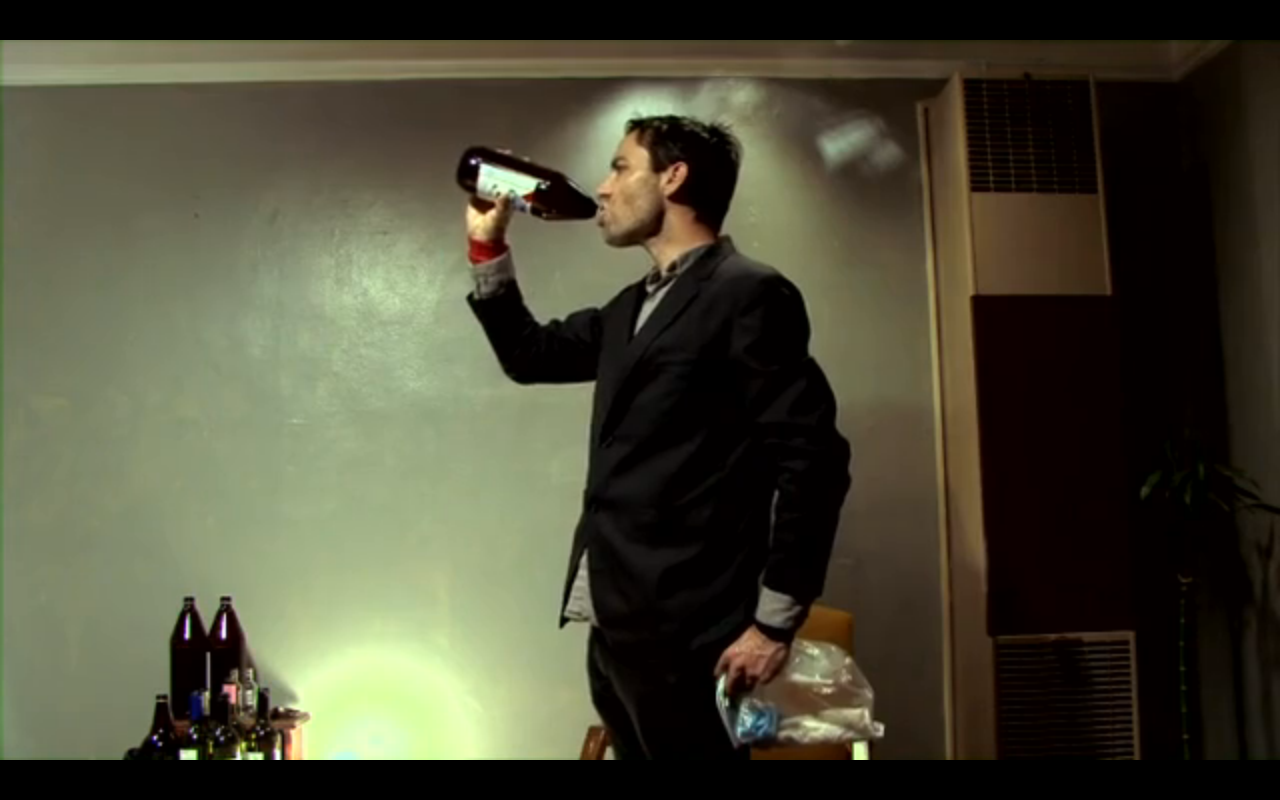
In this way, William Never Married has the open-eyes open-heart quality that I like in cinema. I like when a movie is faithful to its characters first, and I like when the cinematic machine is used to mine something out of the character, and help the audience discover the substance of the character.

There's a funny thing about productions -- it seems like with lots of resources and time a moviemaker can go further in crafting reality, but one knows or senses the large apparatus controlling the reality, and with limited resources and time the reality can be automatic or pre-supposed, and one knows or senses the tininess of the apparatus.
However tiny the apparatus is, it exists, and why should it be disregarded, if it can't be dispensed with. Some lowbudge movies seems like they're saying "this was just happening and we stuck a camera there, believe it. BELIEVE IT." For example Snow on Tha Bluff, a movie I like for many reasons, forces a framing device that I feel kindof cheapens the movie, 'cause I don't understand why a moviemaker would have to insist that what's happening is reality (and like, if that's supposed to help you imagine the movie is reality, why use the imagination in such a limited and duplicitous way).

A moviemaker can't dig more truth out of reality, which just is what it is, but a moviemaker can add truths to reality, I think.


