Mr. De Grazia: Would you state for the jury, please, some of the ways in which this film explores important issues of today?
Stanley Kauffmann: I would begin by stating its basic tone, temper, or theme is the idea of transition, that the picture has grappled basically with the idea that we are living in a time of profound change in all aspects and perspectives of modern industrial civilization; and this basic theme of change, of transition, which is affecting all our lives, willy or nilly, is explored in four or five different veins.
That is, we see change in social attitudes, change in political attitudes, change in that version of political attitudes that deals with military views, changes in sexual relations, changes in the status of women in the society ...
They fought the battle in the courts and on the screen, but does the screen remember the fight? I Am Curious (Yellow) reminds me of the possibility of absolute freedom in film narratives, of the creative potential of dramatic form in cinema. For example, for years I've carried the dream of mid-film credits, for whatever reason, and now I know what that would be like. It'd be charming.
In special features Vilgot Sjöman explains how he asked his producer for film and total creative control with no script, and because it was the 60s or Sweden or for other reasons, this happened. Sjöman shot, edited, shot, edited, and felt he didn't have a complete film, so he asked his producer for more film and ended with enough footage for two movies, Yellow and Blue, the colors on Sweden's flag.
In the book edition of Gus Van Sant's screenplays for Even Cowgirls Get the Blues/My Own Private Idaho, Van Sant talks about his screenwriting form, which he admits isn't traditional. He notes that Hollywood standards are based on a model of conformity, and he fucks conformity. He says the distinctness of his films is a direct result of the individuality present in the way he writes his screenplays.
I believe in the principles of both these anecdotes. The creative artist must allow itself limitless, unreserved potential. Cronenberg talks about this another way when he says the writer shouldn't write with a budget in mind. He insists it'd be a form of self-censorship.
Stanley Kauffmann: Psychologically, the film does its exploration in carrying forward at the same time several different strands of unassailable reality and of variations on that reality that play back and forth, that present a nicely variegated, thick texture of fact and sort of fantasies on fact, which is representative of what our society is beginning to be more and more aware of in terms of our daily perceptions of what we see, that there is a great difference between the black and white that has been formerly assumed of what is fact and what is fantasy ...
Although after all this is said, the film must be watched. What is it like to watch I Am Curious (Yellow)? It's sometimes confusing, boring, alarming, etc. It's a different type of movie, and brings with it different types of feelings.
Stanley Kauffmann: ...what this director is aiming at is exactly that slight fuzziness, slight blurring of the line between what is fact and what is fiction.
It is a part of a modern view of not just art but a lot of matters. What used to be thought of as a clear dividing line, an iron barrier between art and life, should go or can go or has gone, and we are not really aware of it yet.
I quote Kauffmann not simply as an authority, but because of the eloquence and insight in his answers, and his participation in the context of Yellow. Such compassion was shown for a quest of meaning, such tenderness for the individual. It's important to me to see that the movie, in its time, was treated seriously despite its potential lack of solutions, and despite its sometimes playful surface. Kauffmann excavated the inner questions of Yellow, so that the court could grasp the sense of a shared journey between audience and film.
I believe that while exploring the dimensions of a film, as an audience member, you should also be exploring dimensions of yourself, and as the film is more and more revealed to you, you are more revealed to yourself. This can happen in so many interesting ways, but a direct course to indirectness shouldn't be dismissed, although I think in contemporary films it perhaps has been, as a preference for elusive focal points has been relegated to the art house. Mainstream characters, potentially perfect (sometimes designed to be perfectly flawed for dramatic purposes), have replaced people, who have a history of imperfection and ambiguous virtue.
In particular it's interesting that a complex, multi-sided and ongoing battle for societal harmony is explored on a macro scale through the politics of Sweden, and on a micro scale through Lena's experiences, especially her stormy love affair and home life. Yellow's narrative is of Lena, a free thinking 20 year old who tallies the changes brought by radical external development as she participates in her life's narrative and expansion of personality identity, sometimes cordial and sometimes in conflict with the outside world.
The movie knows our greatest problems lie within as much as anywhere else, that the seeds of discord are in the hearts of people and their relationships with each other. The movie wants to truthfully depict this, but is concerned about its manipulations and short cuts, and so Sjöman includes himself and his own conflicts as a filmmaker. The documentary aspects aren't granted automatic ascendency over the fictional elements, and sometimes the two are blended so that vital questions remain more important than easy answers. I too suffer from immense confusions, not easily solved by applying dramatic devices to my life (though I sometimes try, to great disaster, because strong emotions rarely, and then hardly, follow story beats), and find the ideas of Yellow sometimes liberating, sometimes cathartic, and sometimes simply, wondrously relatable.
The question of the camera and its effect on reality is a fundamental concern in filmmaking. Zusje's technique of a protagonist in a camcorder pov raises implicit ideas about the camera's ability to record facets of a person's soul, and of a camera's ability to illuminate the emotions of a person in front of or behind the camera.
Martijn visits his estranged sister Daantje, who has started her own life in Amsterdam. What Martijn's life is like I'm less sure of, and what I know about Daantje I know from Martijn's camera. The film is the record of their relationship as witnessed by Martijn's camera, and we cannot know about the man behind the camera without knowing about the people in front of the camera, and vice versa, and the audience works to realize what they are not showing or telling.
The subjective camera brings us closer to the characters' living experiences and creates an ambiguous emotional surface. For example, why does Martijn hide behind the camera, what is he hiding, and is he hiding? Another example, do the others tolerate Martijn despite his camera, or because of his camera - are they starving for recognition, in whatever form, for attention, however it comes? Is it even about any of these things? The nexus of the film is in the relationship between brother and sister, and the film's narrative is the surface, the mask to, an inward investigation of intricate connections between the siblings.
I had long wanted to do a film that felt like a found home video, and Zusje is that film. Martijn fabricates and conjures a narrative of partial and absolute reality, aiming his camera as a way of personal emphasis, and the people around him respond in spontaneous and unprogrammed behavior sometimes, calculated and purposeful behavior other times. That is, the camera becomes a symbol of the human eye, the obtrusiveness of our lives upon each other, and the way our presence shapes the lives of others.
These two films represent courageous encounters with the substance that envelops certain mysteries of being human. If the mysteries were clearly solved, the essence of mysteries would be neutralized, and the struggle for self-identity trivialized. Answers needn't be strained from dramatic forms. In forcing clarity on complex matters there is the danger of reductionism, and also an ironic non-admission of complexity, a kind of dramatic accusation about the nature of uncertainty. Simply, irrationality itself must thrive in the heart of a film that truly wants to deal with matters of irrational humanity and eternal riddles.
In the spirit of Yellow, I'd like not to end on what appears to be a summation. I'd like to say that I like the scene in Yellow when Lena has a conversation with MLK Jr. from her bike. I like her pedaling feet, and I like Jr.'s face, which must have done so much of his work for him, as it's an incredibly sincere and naked human face, with eyes like deep portals, etc.
05 April 2011
31 March 2011
Cop (1988)
Labels:
80s,
Cop,
Crime Cinema,
James B. Harris,
James Ellroy,
James Woods,
Quote
Joanie Pratt (Randi Brooks): Have you had breakfast yet?
Lloyd Hopkins (James Woods): I haven't been to bed yet.
Joanie: If you come over you can have a little of both.
Lloyd: I thought you didn't like to talk to cops.
Joanie: Who said anything about talking?
Lloyd: What's your address?
 Policeworkprivatelife, where's the line? When not having sex with his wife, which he often doesn't, Lloyd has sex with women on the periphery of his detective work, as a time saving measure. He's a work obsessed cop, the type who develops an unprofessional monomania and bends the law when necessary. He has a very high arrest record, so people respect him, including higher-up Dutch Peltz (Charles Durning). Lloyd is just so damn good (or is he, if you know what I mean).
I'd like to know the roots of this type of film and character, but I'm not sure how to investigate its history. Touch of Evil, Orson Welles 1958, is a very important and early example in the film world, and Jim Thompson's 1952 novel The Killer Inside Me is a remarkable development in shaded cop figures (though not the same; I'd have dinner with Lloyd, but not Lou). I'm not sure if those are the earliest or ground-laying examples because I'm not an aficionado of crime films or novels. There are people who are experts in this field, and I'd like to meet one and ask them. I will look for the loner in the bar, wearing a fedora, and ask that person. If that person happens to be James Ellroy, he'll ask me if I know that Cop is an adaptation of his 1984 novel Blood on the Moon, and I'll say yes. The film is adapted and written by James B. Harris, who was a producer for Stanley Kubrick on The Killing (and Paths of Glory and Lolita). The Killing has a corrupt cop but not a questionably corrupt cop.
Although I believe cops like this exist in real life, and Michael Mann told me they take purer forms, I don't believe they exist like depicted in Cop, which is very sensationalistic and even kind of goofy. For example, the killer is a poet who leaves notes like "Next class - phys ed/Then you'll be dead." Movies like this can be a lot of fun, but also some of the goofiness is poorly done and perhaps unintentional. More than anything else, more than the clichés, the cardboard characters, the cheap dramatics, the easy laughs, more than anything it bothers me that a major dramatic moment takes place in a phone booth.

 The above depicts the revelation of the true identity of the killer. It's in a fucking phone booth, over the phone. The scene may have been taken directly from the book, but it shouldn't have been, because even if it works in the book there's no way this is a good movie scene. If anticlimax is its intention it comes off as disingenuous given the loud dramatic notes that ring throughout the movie. How a movie with lines like "I don't give a shit if you two were fucking each other in a bathtub of cocaine" can come to make such a bad decision is beyond me.
Lloyd Hopkins (James Woods): I haven't been to bed yet.
Joanie: If you come over you can have a little of both.
Lloyd: I thought you didn't like to talk to cops.
Joanie: Who said anything about talking?
Lloyd: What's your address?

I'd like to know the roots of this type of film and character, but I'm not sure how to investigate its history. Touch of Evil, Orson Welles 1958, is a very important and early example in the film world, and Jim Thompson's 1952 novel The Killer Inside Me is a remarkable development in shaded cop figures (though not the same; I'd have dinner with Lloyd, but not Lou). I'm not sure if those are the earliest or ground-laying examples because I'm not an aficionado of crime films or novels. There are people who are experts in this field, and I'd like to meet one and ask them. I will look for the loner in the bar, wearing a fedora, and ask that person. If that person happens to be James Ellroy, he'll ask me if I know that Cop is an adaptation of his 1984 novel Blood on the Moon, and I'll say yes. The film is adapted and written by James B. Harris, who was a producer for Stanley Kubrick on The Killing (and Paths of Glory and Lolita). The Killing has a corrupt cop but not a questionably corrupt cop.
Although I believe cops like this exist in real life, and Michael Mann told me they take purer forms, I don't believe they exist like depicted in Cop, which is very sensationalistic and even kind of goofy. For example, the killer is a poet who leaves notes like "Next class - phys ed/Then you'll be dead." Movies like this can be a lot of fun, but also some of the goofiness is poorly done and perhaps unintentional. More than anything else, more than the clichés, the cardboard characters, the cheap dramatics, the easy laughs, more than anything it bothers me that a major dramatic moment takes place in a phone booth.


29 March 2011
Mogambo
Labels:
50s,
Adventure,
Ava Gardner,
Clark Gable,
Grace Kelly,
Jean Harlow,
John Ford,
Mogambo,
Quote

Victor Marswell (Clark Gable): What shots?
Donald Nordley (Donald Sinden): Yesterday, at the settlement, the tsetse fly injections.
Victor: Tsetse fly? Your letter didn't say anything about going up into tsetse fly country.
Linda: We understood we had to go through that territory to get to the gorillas.
Victor: Not necessarily. And why gorillas?
Donald: It's a pet theory of mine. I want to study gorillas, their family life and so on. Even get some of their vocal sounds on a tape recorder I brought with me. It's a theory on the derivative evolution -

Victor Marswell isn't interested in much more than his manliness, and Mogambo presumes that women, for example Ava Gardener and Grace Kelly, when confronted with this man, are unable to resist him. Contemporary social and cultural norms of manliness and man beauty are substituted for believable development of sexual tension, and a then-popular, widespread conception of Gable as attractive is necessary in order to understand the romantic triangle.
John Ford's Mogambo, 1953, is a remake of Victor Fleming's Red Dust, 1932; John Lee Mahin worked as a writer on both, from an earlier play by Wilson Collison. Clark Gable, somewhat ridiculously, stars in both films. Red Dust is a lean 83 minute film that still holds up, last time I checked, last year on my birthday for a rubber plantation double-feature with White Woman. Red Dust is pre-code and pre-manners, the kind of early Hollywood movie run by lunatics and preposterous behavior (the kind that's a lot of fun in my opinion).
Much of Mogambo has lost its flavor over time. For a number of reasons it was tough for me to think of Victor as heroically manly. First, he flirts with women using corny, transparent sexual innuendos. Coded sexual language is a familiar Hollywood device, but here the dialogue is strained and uninspired. It's just not sexy. Red Dust's famous Jean Harlow bath scene is fun, sexy, and surprising; in Mogambo, Ava Gardner's shower scene is pretend turn-on. Second, his Africa is both real and fake, on-set and on-location, a mixture of rear projections and cut-aways.

Ford's intention must have been to use the exotic as an intensifying backdrop. This would have worked if the love story itself had reached exotic heights. It remains standard love story fair, if not worse. I felt bad at the end, for everyone. Linda's husband's smartness and manners aren't enough to keep her, he isn't exciting enough, and when she wants to enjoy dirty hut sex with Victor she does. When Victor feels bad for Donald and gives Linda back, he decides to marry Eloise (Gardner), and Eloise is more than happy to be asked back.
There's a reality to the outcome that I respect Ford for observing, and the story and its consequences are basically the same as Red Dust. The difference is the bloated running time, and the visions and sounds of Africa (Ford used tribal music in place of a studio score). These are efforts to make the story something it's not, to transform it to a larger scale.

27 March 2011
Waterloo Bridge (1931) and Red-Headed Woman

Roy's stepfather, Major Wetherby: About a what?
Roy: Well, about a girl.
Major Wetherby (to mother): I don't know what he's talking about.
Roy's mother (o.s.): A girl, darling, you know, a girl. A girl.
Major Wetherby: Yeah, yeah, yes, I know, a girl is. Well, what about it, boy?
Roy (Douglass Montgomery) meets Myra (Mae Clark) on Waterloo Bridge during an air raid, each helping an elderly lady recover potatoes fallen from her basket. Fourteen days before he returns to the trenches, Roy, nineteen years old, falls for Myra, a sometimes chorus girl and hooker. He intends to marry.


Waterloo Bridge, a 1931 pre-code hyperdrama, is an early film by the forty-one year old James Whale. He directs with an eye for behavioral nuance, exhibiting an unusually prominent and sincere quest for the truth about his characters. There's more than mischief to the film.


Whale shows deep concern for the nature of her dignity. She knows Roy's money comes from sweetness, which makes it different, but she wonders how to have a pure relationship with Roy.
Whale's characters, even when reciting pat, over-written lines, or under-performing as actors, maybe especially then, are connected with a pulsing sense of life. Curiosity in the true emotions of his characters brings him to explore the fringe details of their lives.


Myra prostitutes herself for a degree of independence, and draws lines between her profession and romantic love, while Jean Harlow, in Red-Headed Woman, and Barbara Stanwyck, in Baby Face, each play a secretary who enters the pants of the man in the top floor office, in order to climb rungs on a social ladder from which they're otherwise excluded. They seek not nights with the men, not only a month's rent, but full lives of luxury and class.
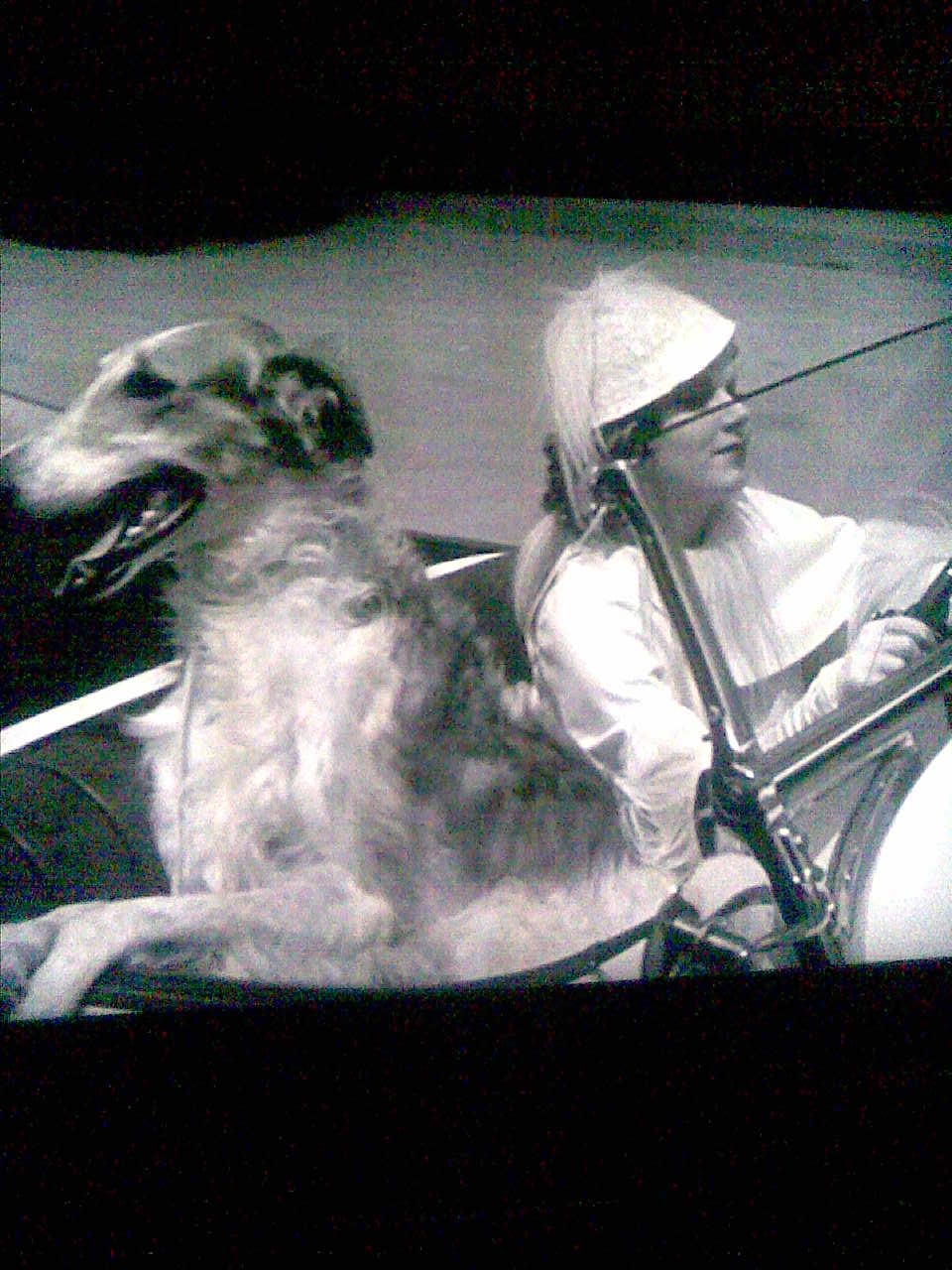
In this way Lil reminds me of Boudu from Jean Renoir's Boudu Saved from Drowning, 1932. Homeless Boudu was taken in by the wealthy but rejected the prospect of change, and the film rejected the idea that Boudu must undergo a transformation or epiphany because of his contact with high society and comfort. Boudu, in the end, is Boudu, and Lil, in the end, is Lil.

09 March 2011
District B13, District 13: Ultimatum, and Taken
Labels:
00s,
Action,
District 13: Ultimatum,
District B13,
Luc Besson,
Mainstream,
Patrick Alessandrin,
Pierre Morel,
Taken,
Trash
Sometimes, while watching Pierre Morel's Taken, I felt a sense of magic. Not about the movie, but about me. I felt like a soothsayer, because I knew what was going to happen next and what was going to be said next (most people will), especially in those beginning thirty minutes, before the daughter is kidnapped, when the characters and their relationships are being set up. I'm not just being an asshole, I'm also being sincere: there was truly an instance in which I mouthed the dialogue along with the actress (Famke Janssen), despite never having seen the film or read the script.
It's clear that Besson now concocts whole films around a handful of attractive and sensational elements, and then hires a screenwriter to attach bullshit and perfunctory story formulas. That's too bad, on the one hand, because I'm speaking about the same Besson who once gave us better films like Le Dernier Combat (which had the courage to be what these films should be - without dialogue; some action movies in the future, I hope, will be more like silent films), The Big Blue, La Femme Nikita ... well you know who Besson is. In District 13: Ultimatum's blu-ray special features there's an interview with Cyril Raffaelli, who had a starring role in both District B13 movies and also served as fight choreographer. In this interview he's describing a moment in which he discussed his idea for a fight scene with Besson, who seemed pleased with what he was hearing. "Just so you know," Besson told him, "in this scene you're going to be holding a Van Gogh."
It's pretty great, on the other hand, because Besson still wants to create cinematic special-worlds, engineered for the delight of an appreciative audience. The action moments of Taken are when Morel shines the most, naturally, and I don't mind the way he emphasizes cinematic propulsion over continuity and logic. He edits purely for the sensational delight of the audience, and a late car chase and fight scene were expressionistic and thrilling rather than realistic and detailed. I don't mind that at all. He succeeds in engaging the audience because he thinks as an audience member seeking escapism, exaggerated emotions ("I don't like realistic movies," a friend once told me, "no, real life is boring enough.") and heightened experiences.
But in my opinion if you're going to exaggerate, and I've said this before, exaggerate all the fucking way. District B13, for example, is indeed a better movie than Taken. Not because it's smarter, no no no, but because it succeeds in capturing the bliss of decadent fantasy. It's as if the French found an abandoned Escape from New York narrative vehicle, hot-wired the thing, and drove it into 21st century Paris. Glorious! The extent of the liberation you allow your imagination is the difference between a low or high-brow film and a middle-brow film, and middle-brow films are worthless in every way except generating ticket sales and quickly becoming forgotten.
This is also why I think District 13: Ultimatum is better than District B13, even though I fell asleep three times while watching it(?!). District B13 used actor Bibi Naceri (who plays the crime lord in the movie) as co-screenwriter, and he and Besson designed some story about, um, revenge and valor, things like that. No co-screenwriter is listed for Ultimatum, and themes are borrowed from the original. Based on the Raffaelli story about the Van Gogh, and the experience of having watched the movie, I'd speculate they made the shit up while they went along, i.e. action took precedence over story. That's how they sometimes work in Hong Kong too, and I've come to appreciate the method. It allows for the superficial elements of the movie to shine, as it should.
General opinion seems to be that District B13 is the better movie. That's probably because its narrative makes more sense, relatively, and so its action has more meaning or impact. Get out of town. The meaning of the District B13 movies is action, and its true themes are punches, kicks, and parkour. Ultimatum clearly better develops these themes. The story, as it is, is ten times more confounding, outrageous, and unbelievable; as it should be. If I'm going to have a conversation with a crazy person, I want to have a conversation with the craziest goddamn person in the city, personally.
28 February 2011
PIFF 2011: A Few Specific Things
For various reasons it's unlikely I'd listen to a full 58 albums or read a full 58 books within a month's span. One reason is it might get in the way of watching movies. From the end of January to the end of February I attended 58 theatrical programs 62 times, while continuing to view titles at home*.
Which is to say films took over my life, in not an entirely positive manner. A lady told me she didn't know what was going on in Egypt and it occurred to me I didn't know what was going on in my life. Plus, Egypt didn't have any films in PIFF this year. Egypt's Garbage Dreams was one of three amazing documentaries at the festival last year.
I'm bound to compare this year and last year, as I'm bound to compare the films to each other; hence, the last post, with films ranked by a count of stars. Which is silly and vague, overall.
So I wanted to say a little more about some films I wanted to say a little more about. For example, I nearly walked out of Poland's All That I Love during its first half, but several good writing choices and two sexy scenes (even middle-brow dramas have sex scenes in European films) made me glad I stayed. The relationship between the band singer and housewife was depicted in tender but brutal tones, and fully developed might have turned into something resembling Fassbinder. Conversely, Sweden's Behind Blue Skies began with several strong dramatic decisions and a sexy scene, but its narrative suffered from diminishing inspiration. A scene with Martin's (Bill Skarsgård) cock in a girlfriend's mouth, as she attempts to persuade him to spend the night with her, was very well done.
At the beginning of The Housemaid, a South Korean remake, a girl stands on a ledge overlooking a neon city block and the camera is over-the-shoulder. My friend says "Enter the Void" enthusiastically. The rest of the movie disappoints, and by the end just goes up in flames. Thankfully, real flames. The Revenant was the worst of the midnight screenings, but somehow charming, like its writer/director D. Kerry Prior, who proudly brags about beginning his career in the special effects department of Don Coscarelli's movies. His film quivers with life but never bursts.
Good Morning to the World was an encounter with a micro-budget Japanese art house film, probably made by a young filmmaker. The way Hirohara Satoru wanted to use his camera to express the interior loneliness of his character made me less lonely, and I hope the filmmaker finds a path that leads to fully realized films. The Woods was this type of movie: everything I didn't like about the movie could perhaps be used as a reason to like the movie. But I don't buy it. Films like Milestones and Symbiopsychotaxiplasm show you can have hippie idealism and also create an interesting film. The Woods dresses a formless, hollow narrative in clothes of innocent rebellion, and if you can buy that you can buy the whole thing. I'll buy Gas-s-s-s. No one could decide if The Woods was more self-indulgent than Heartbeats, but Heartbeats won me sometimes with its sincerity, because sincere self-indulgence is still sincerity.
In Italy's The Double Hour the dream was real (and in The Last Circus the dream is very, very real), but I could hardly care because its double-cross story is entirely lifeless. Just like the art design and attention to period detail don't elevate the predictable, cheap dramatics of Spain's Black Bread or Lope. France's The Princess of Montpensier, directed by Bertrand Tavernier, is better because it treats period detail with a light, minimalist touch, and the characters feel greater in importance than the settings.
Human Resources Manager was the second best movie at PIFF about the transportation of a dead person, as La Pivellina was the third best movie involving a circus performance (the latter suffered from a low-quality source material, which was too bad). Cameraman was illuminating and sometimes inspiring, but clearly preaches to the choir (the same choir was better preached to in Clouzot's Inferno).
As it began I was afraid I was going to like New Zealand's Boy too much. It begins with a great montage over the audio of Boy's class presentation. The montage and presentation provide the audience with knowledge of Boy and his environment, and though the technique was familiar, I loved everything, all the small touches, like the notebook paper animation, dead-pan Michael Jackson admiration, and other curious details. Unfortunately, the experience was for me more curious than emotional, which is how some felt about the opening night film, François Ozon's Potiche. They could be right - but as with other things, if you want to be that thing, be it all the way. And I thought Potiche was curious, playful, and charming for its duration. It's sort of like if Scott Pilgrim was shown on a television in a Douglas Sirk movie, if that makes sense to you.
Japan's Mutant Girls Squad was Scott Pilgrim shown on a television in a Shinya Tsukamoto movie, if that makes sense to you. It sometimes murdered me with novelty and exuberance, and its commitment to cinematic insanity impressed me. It's better than Potiche which I gave a half-star more. I hope that demonstrates the faultiness of the star system, and also the absurdity and energy of Mutant Girls Squad, which I recommend to anyone wanting a cinematic freak out.
Real life conversation: from a friend's point of view, I should care more about the humanitarianism side of Spain's Even the Rain. I tried to make it clear my disappointment was with the dramatic shortcuts and easy answers (which Aftershock and The Whistleblower suffered from to even greater degrees). I appreciate that Even the Rain internally addresses several innate hypocrisies and contradictions in its film type, but I wanted more from the character design, not the ideas. It's possible to do both, as Costa-Gavras and Pontecorvo demonstrate.
The same could be said about Denmark's A Family and In a Better World, both of which I think begin with a promise of emotional honesty they ultimately betray in the interest of dramatic form. On the one hand these movies create a full-size portrait of an issue, on the other hand they neither trust their characters nor the film viewing audience with a component of imagination or mystery. They illuminate all the shadows - thus missing the point of shadows. Isn't that the error of so many films? They want to be films - the popular, widely accepted concept of films - so dearly they willingly seek comfort over challenge. The end of Germany's When We Leave, good or bad, designates it as a movie. A good movie ending brings a question or answer to both the character and audience, and in this case it's hard not to think mainly about the end in terms of dramatic structure, thus stripping the preceding moments of some of their grace. The difference between my appreciation for France's Illegal (how many mother/son relationship films were there this year?) and When We Leave, which both both use dramatic form to expresses emotional intensity, may be a result of Illegal's slightly less definitive ending.
Austria's The Robber is like character contrivance as religious, spiritual, and cinematic worship. The film is all speed and grace. This is sort of fucking brilliant: he's a bank robber who is also a marathon runner, and after each robbery there's a kind-of marathon in which he flees the scene(s) of crime. He's Mann's professional criminal developed to a logical absurdity. The narrative is a polished version of the blank-faced criminal odyssey.
The more I watch and like yakuza films, the more I like Takeshi Kitano. Outrage's deadpan brutality is occasionally softened by environmental flourishes or incredible consequence, and sometimes a scene has both intensity and density. But I never feel like it accumulates dramatic urgency, and I don't feel any closer to the movie by the end. This may also have been my problem with Great Britain's The Arbor, a much different movie, a documentary about British working-class playwright Andrea Dunbar and her family. Dunbar was a mother, and the movie develops beyond the story of Dunbar by entering the story of her children, who recount their stories in taped sessions that are played while actors lip-synch the recordings. I admire its formal inventiveness and narrative nakedness, but sometimes the technique interfered with my emotional investment, and I struggled with the distance between the actual person's voice, and the actor's body and moving mouth.
If you're going to be contrived, you can be contrived all the way, as Spain's The Last Circus demonstrates. The movie makes a thrill ride out of contrivance, and pushes the viewer further into the insanity of its concept as the film progresses. It's a crazy movie, in a completely safe way, and I admire it for its sometimes lavish detours into narrative incredibility. The mania is directed, by Alex de la Iglesia, sometimes with cinematic and visual grace, and sometimes for gaudy fun; if you begin to lose sight of the difference the film works. I did hear one lady say "What kind of person would like this film?".
USA's Cold Weather wants to create the contrived out of natural materials (it's from the city of Portland). Writer/director Aaron Katz attempts to translate a personal, naturalistic style into compact, genre form, and the result sometimes exposes the limits of each. I would say it makes the sides bulge, in a good way, as Katz continues to ask important questions about film nature, and its relationship with the natural, and succeeds in pulling off a meta-genre film without violating filmmaking principles previously demonstrated. It's a growth film for Katz, and might be a film that grows on me.
How to Die in Oregon made tears swell in my eyes three times, and I took a break from the movie after its first twenty minutes. I went into the lobby for a moment, because everything was so heavy for me, and then returned to the movie. It's truly hard for me to separate my feelings about the film from the intense feelings the stories produced in me. I can't imagine making this film, I can't imagine spending hundreds of hours pursuing this and editing it and living with it all the time. I liked the film and I can't imagine watching it again. The film's own clear headedness is a testament to the documentary skills of its maker.
Chile's Nostalgia for the Light brought the universal and personal together through two narrative strands of equal interest and philosophic weight: astronomers, and women who seek remains of the disappeared; both in the Atacama Desert. The complimentary aspects of the narratives are skillfully developed and explored. Mexico's Circo wasn't a documentary version of Geek Love, but a sadder, realer story of circus life and family, less sideshow and more acrobatic. It follows the Ponces as they struggle to find an audience and grow as performers, and investigates the shared traits of real life and circus life. Like the family members, I wasn't sure which I preferred.
Italy's The Four Times was a big surprise, and the second biggest discovery after My Joy. In The Four Times, it feels like Michelangelo Frammartino directs nature. Four narrative strands are given equal emphasis and attention (one of the strands is a baby goat, and another strand is a single tree). The Four Times is an amazing movie of amazing natural and narrative simplicity, fully realized by a sophisticated film design.
Ukraine's My Joy vividly draws the viewer into a miserable world through a perspective of utter bleakness - a message about the transference and perpetuation of hate and fear. It's an icy, cruel film, haunted by violence, that manages both to depict malevolence and conjure it as well. Its overall lack of redemption emboldens several of its core tenets, denying the audience the same escape from harsh reality impossible for its characters. Sergei Loznitsa demonstrates an extraordinary talent for cinematic craft, and his skill in creating fully realized sequences allows the film to work.
In Uncle Boonmee Who Can Recall His Past Lives, every element of the film's design works in harmony, creating a lush sensory experience. The movie is a steamy love session with cinema. Weerasethakul creates rich, dense sequences, which work because of their intensity, sincerity, and mystery. The film builds and expands several themes and environments introduced in Weerasethakul's earlier films, and continues to enlarge the meanings of his films, which work well together when seeking sometimes subterranean themes. His actors are given or seem to be given total freedom, and sometimes encounter fantasy elements in a realistic but cinematically surprising state of nonplus (and then a kind of tonal, philosophical fusion; a spiritual condition of perpetual awe).

Lee Chang-dong's Poetry must have been my favorite movie, because I think of it as having everything all the good films had. I admire it for its penetration of both character and cinematic form. Chang-dong makes the interior of Mija (Yun Jeong-hie, who radiates, seriously count her mysterious smiles) the stuff of cinematic dimensions. He creates a fantastic fabric out of personal emotions; he deconstructs filmic types in a way that's intensely specific and dramatically engaging.
The tapestry of emotions is clearer in the second viewing, and more rewarding. Chang-dong quietly insists everything has an importance and dramatic depth, but feels free to leave dangling narrative strands and obscure structural departures. The point seems to be it's important because it happens in Mija's life, and like all narratives of self, Mija is her own main character and seeker of meaning; this is beautifully magnified by Mija's search for poetic voice. Like Saul Bellow, Chang-dong believes each person carries a batch of poems.
I've heard it said the scenes run too long, which is what they always say about the films I like. I think these people aren't asking themselves the questions Chang-dong is giving you the freedom to ask, or experiencing the moments Chang-dong is asking you to experience. If you don't shrink from the emotional freedom and mystery that's being offered, it's a film of pervasive and endless beauty. I also believe the film sticks its landing, and succeeds in other important narrative moves.
*Including Endless Love, The Taking of Power by Louis XIV, Eccentricities of a Blonde-Haired Girl, French Cancan, Spring in a Small Town, Diary of a Lost Girl, The Devil's Sword, The Girl Who Leapt Through Time, Who Are You Polly Maggoo?, Perfect Blue, and Ghost in the Shell!
27 February 2011
PIFF 2011: An Overview
Four Star Movies
Uncle Boonmee Who Can Recall His Past Lives (2x)
My Joy (2x)
Poetry (2x)
Three and a Half Star Movies
The Four Times
A Somewhat Gentle Man
The Last Circus (2x)
Of Gods and Men
Three Star Movies
If I Want to Whistle, I Whistle
Silent Souls
The Robber
Nostalgia for the Light
Certified Copy
Rubber
Circo
Potiche
Revolución
How to Die in Oregon
Two and a Half Star Movies
Cold Weather
Outrage
Honey
The Arbor
Illegal
Mutant Girls Squad
Armadillo
Son of Babylon
Steam of Life
The Princess of Montpensier
How I Ended This Summer
The Woodmans
Boy
Two Star Movies
Even the Rain
A Family
Of Love and Other Demons
Behind Blue Skies
Cameraman: The Life and Work of Jack Cardiff
In a Better World
When We Leave
La Pivellina
Sawako Decides
Human Resources Manager
The First Beautiful Thing
Black Bread
One and a Half Star Movies
All That I Love
Kawasaki's Rose
The Housemaid
Lope
The Revenant
The First Grader
His & Hers
Passione: A Musical Adventure
Good Morning to the World
The Woods
Heartbeats
The Double Hour
One Star Movies
Barbershop Punk
Incendies
Half Star Movies
Aftershock
The Whistleblower
Total: 58 movies + 3 shorts programs, and 4 repeat viewings.
Subscribe to:
Posts (Atom)