Google Analytics informs me that Mystics in Bali(!), Cría Cuervos, Enter the Void and Incendies are the most frequently searched titles by which singles of people throughout the world find their way here. Though I don't think I answer, in their original entries, the questions implied by the search terms, and because I too am often disappointed by a lack of answers from the sites I visit for answers I'd like to offer the following two points:
Incendies Ending The rapist/torturer in the prison in which the mother was held as a political prisoner was her first son (which her other two children were searching for). So the son was raping the mother. The son/rapist is also the little boy at the beginning of the movie when the first Radiohead song (which, alas, I don't know the title of - another frequent search) plays. The mother identifies the son/rapist by his tattoo. That's why the two letters are delivered to him, one as a mother, and one as a victim. This also makes the father of the second and third children the first son, or in other words the man is their father and brother. I bet you actually knew this but didn't want to believe it.
Twin towers in Enter the Void During the Love Hotel sequence, as Oscar's spirit/the camera travels through the rooms of love makers, there is a moment that's either a flashback or a flashforward. The moment intercuts Linda and Alex's lovemaking (Linda also morphs into Oscar's mother [as Victor's mother did in the previous scene]). Like the final moment this intercut is out of focus (Noé has confirmed the woman in the birth scene is Oscar's mother): a man and woman couple, on a bed, hold a baby while a young girl in a yellow dress plays with a stuffed bear. The camera floats out the window and there's a skyline, and in the skyline is apparently the twin towers. I'm not a NYC skyline expert, but I think, like singles of Internet searchers across the world, that two buildings in the skyline are the twin towers. It's a confusing scene because the young girl is in a yellow dress, as Linda (young and old) often is in Enter the Void, and she has the bear Linda often has, but if it's Linda in the dress it can't be Linda on the bed with the baby, and also if it's Linda in the dress it can't be Oscar as a baby since Oscar is the older brother. The man appears to have long hair like Alex, and due to the content of the scene it intercuts (including the ejaculation, naturally) you would think it's Alex and Linda holding their second baby with their firstborn daughter playing with the bear and wearing the dress, perhaps a dream of the future Oscar has. But if those are the twin towers how can that be, since the towers were destroyed on September 11 2001?
26 April 2011
19 April 2011
Notes on Rubber
Labels:
10s,
Art House,
Horror Comedy,
Quentin Dupieux,
Rubber
NO REASON, SOME REASON, LOTS OF REASON
There is a kind of narrative that must be played out as long as the wheelchair bound spectator (Wings Hauser) lives, and a narrative is a kind of waterfall of reasons, fundamentally (this movie has many of those rocks which jut out from the otherwise smooth surface behind the waterfall). Things can make sense without being sensible, or as a friend told me after watching Rubber a second time, "There are parts of this movie I like without knowing why."
The movie begins with a series of chairs set up for no apparent reason that are destroyed for no apparent reason by an oncoming car along the desert road, but one of the spectators later questions why the chairs were destroyed when they could have been sat in - this joke begins a series of internarrative logic based paradoxes which expand in humorous and interesting ways through the movie's duration (by the way, the movie begins not with this car, but I believe with the man holding the binoculars, which is a weird image, later given reason when the spectators use the binoculars in an impossible way made possible by internarrative logic: it's how they watch the movie they create by watching it).
IS ROBERT INNOCENT OR MALEVOLENT?
The #1 reason I went to see Rubber a second time was to have a good time. The #2 reason was to investigate an alternate interpretation of Robert's character which was proposed to me over roasted bone marrow at the Little Bird Bistro on my birthday. Attempting to describe the movie for a friend, I began by stating that it's "about a malevolent tire that emerges from the desert without a past and embarks on a senseless mission of violence." Whether it was the special day, the bone marrow, or naive arrogance, I remember feeling that I was at the beginning of a pretty good description, which is sometimes difficult to do on the spot and unrehearsed. Only, then a friend across the table interrupted me, "Ahhhh. I don't know," he said, perhaps wagging his finger, "I thought Robert was an innocent." "Me too," someone else said. "[Something about a tire's destructive nature and the fulfillment of natural urges]" my first friend said. "[Something about lions in the wild hunting for food,]" another friend said. I defended my position okay enough, but I don't believe I changed minds just then. Later of course there were things I wished I'd said, but didn't say then, but said, with appropriate conviction, in muddled whispers to myself while showering or aimlessly walking. Many people don't appreciate other people stirring misunderstandings or conflicting viewpoints, however, and so it's been my own battle since then.
Robert’s a pretty malicious character, but he’s also likeable. What was your inspiration for that?
Quentin Dupieux: Honestly, when I wrote it, it was only supposed to be an evil character. In my mind it was like, ‘Okay, it’s just the bad guy,’ but then, when I started to shoot it, I had to deal with a tire and there’s nothing evil about a tire. So I had to change my mind a little bit (laughs), and when we did the first tests with the remote controlled tire – I had the camera attached to a stick – and it was just following the remote controlled tire in the field and, at this point, the tire was like a dog. The way it was rolling and behaving in the field, it was like a dog. So I decided, ‘Okay, it’s like a dog. It has to be like a dog.’ That’s why there’s shots where it drinks water, things like that. Suddenly, it was not just an evil character. It was more like a stupid dog. That was the inspiration.
Dupieux's answer seems to validate both interpretations to some extent. I wonder how different it would be if Robert had a face, or at least eyes, and what that face or those eyes would make us believe, or rather, how those eyes or that face would strengthen the force of our beliefs. Ultimately the answer is that Robert is fictional and neither malevolent nor innocent, but rather a character obeying laws appointed by a writer constructing a narrative, and given the facelessness of Robert and the multiple original concepts for the inanimate object, it's the best answer. I also submit that this answer is no fun.
EVIDENCE OF MALEVOLENCE (can I say I'm so, so pleased with this note's heading?)
1. Robert explodes heads.
2. There is a montage of people with destroyed heads. These people are strewn about streets and sidewalks and seem unconnected to the narrative trajectory, i.e. the love story between Robert and Sheila, which motivates many of Robert's actions.
3. Robert doesn't attempt to destroy trees, buildings, cars, etc., and if he was truly innocent wouldn't he not be making these types of distinctions while expressing his inborn state of destructiveness?
4. It's true that tires are kind of destructive, but a) it's not like their principal purpose is destruction, like a bullet or missile or something, and b) if you view a tire as destructive it's only because of the way humans use them (they put them on their cars and drive over surfaces and sometimes minor obstacles), and hence it's a nurtured or acquired state, because if you see a tire just fucking lying on a store shelf not on a car or anything and like shiver from fear of personal injury caused by the lifeless tire you're a fucking weirdo.
THIS IS TOO CONFUSED TO COUNT BUT
My initial confrontation with the question of Robert as like a lion was to quip, "A lion doesn't seem innocent when it's attacking you," which was good enough to cause the group to consider, but upon review it really seems more like fate or circumstance is the malevolent force and not the lion, because the lion continues to behave as a lion, lacking aspects of self-awareness and premeditation that enable its action to be labeled malevolent, or at least its kill to be called murder. But for me this opened a rabbit hole into other considerations, primarily I began to wonder what animal first ate another animal, what was the first one with teeth that bit into another living creature, and whether the witness sensed on a primal level (which was just the normal level at that stage I guess) something wrong about carnivorousness, and like signaled with unspoken emotional communications that an abrupt change in the perceptions and realities of relationships and communities was taking place, if the animal witness thought, even without advanced levels of self-awareness and certain reasoning faculties, "this is going to lead us to horrible long-term consequences, this single act here" and if the animal trembled, really trembled. It seems to me the origins of senseless killings are tethered to the origins of purposeful killings, because when no one is eating anyone else, and then someone eats someone else, isn't that the beginning of malevolence? It would benefit the conversation to offer definitions of the words on trial:
malevolent |məˈlevələnt|
adjective
having or showing a wish to do evil to others
and
evil |ˈēvəl|
adjective
profoundly immoral and malevolent
• (of a force or spirit) embodying or associated with the forces of the devil
• harmful or tending to harm
• (of something seen or smelled) extremely unpleasant
noun
profound immorality, wickedness, and depravity, esp. when regarded as a supernatural force
• a manifestation of this, esp. in people's actions
• something that is harmful or undesirable
and
innocent |ˈinəsənt|
adjective
1 not guilty of a crime or offense
• [ predic. ] ( innocent of) without; lacking
• [ predic. ] ( innocent of) without experience or knowledge of
2 [ attrib. ] not responsible for or directly involved in an event yet suffering its consequences
3 free from moral wrong; not corrupted
• simple; naive
4 not intended to cause harm or offense; harmless
noun
an innocent person, in particular
• a pure, guileless, or naive person
• a person involved by chance in a situation, esp. a victim of crime or war
• ( the Innocents) the young children killed by Herod after the birth of Jesus (Matt. 2:16).
An animal is harming the other animal it eats, even if it's within its nature to eat it, though it's free from moral wrong, and as it doesn't know the potential depths of its own consciousness it can't be expected to grasp the potential depth of another consciousness. The thing about mankind is we've brought efficiency and numbers to the act of killing, and introduced the term murder - which I definitely don't think animals do, murder, given the premeditation aspect (though it's kind of cute to imagine lions hunched over a table covered in blueprints, cigars in their lion mouths) - but I reject the claim that this makes us extra evil, or only extra evil, because we're also capable of extreme tenderness, compassion, empathy, mercy, rectitude, etc. We're simply extra capable creatures who possess sufficient reasoning faculties that we hope will eventually win the battle over our extra harmful potentialities. The thing about the cycle of life and nature and shit is that advancement and evolution entail injustices that must be balanced by nature, and I think it's interesting that human self-awareness and reasoning allow us to kill plentifully, but also love exceptionally and to amazing degrees. Robert demonstrates an advanced degree of self-awareness, a component of humanistic reasoning, by loving Sheila for purposes beyond evolutionary or survival advantages. She doesn't pet him, take care of him, etc., though she doesn't attack him either. Robert's consciousness lacks a sense of morality, perhaps, but I believe his knowledge of love is superior to, for example, King Kong's. Robert's story is like the story of King Kong - Robert is taken from the jungle of unconsciousness into the civilization of consciousness - and they're both captivated by a single woman - but King Kong behaves like a real animal, and is only violent in animalistic senses, while Robert demonstrates several human and superhuman qualities that could potentially result in culpability for his actions, which extend beyond self-preservation. I'd have dinner with King Kong, but not Robert.
EVIDENCE OF INNOCENCE (AND EXPRESSIONS OF PERSONAL BIAS)
1. Well, it's not like lions confusedly attack trees and buildings (please link to appropriate article w/pictures if they do). They attack things which pose a threat to them, and Robert makes peoples' heads explode because they are his potential threat (but was the water bottle a threat, was the glass bottle, and was the goddamn bunny?).
2. As Dupieux discovered when he began to consider the tire as an evil entity, a tire is not inherently evil. Think of the lion again, and think of training a lion to attack, which is weird so downgrade and think of an attack dog: the dog takes on a violent purpose due to conditioning and training. Robert is trained to destroy through a past life as a car's tire (as seen, in fact, during a flashback after the pool drowning incident). The lesson of destruction is forced upon it through prolonged experiences that shape its view of reality, made to absorb violence at the center of its being, its nature corrupted by man. I think Robert demonstrates signs of advanced consciousness and self-awareness, for example emulating Sheila by showering (to shower, Robert must have used his mind powers to turn the water knob), swimming, and watching television, and I think these evidences of advanced consciousness rule out this consideration, but maybe not.
EVIDENCE OF THE NARRATIVE BEING THE CORE OF ROBERT'S ESSENCE AND THE SUBSTANCE OF HIS DESTRUCTIVE NATURE
1. Robert becomes inert (at the bottom of the pool, though, a kind of multiply motivated inertia I admit) when the narrative is believed to be concluded due to the deaths of the spectators. Once this is disproved and reported, he re-animates and kills the hotel owner.
2. Seems like, in the same scene, he should have exploded the head of Lieutenant Chad (Stephen Spinella) to eliminate the brunt of his woes.
EVIDENCE THAT ROBERT COMES TO EXIST ON THIS NARRATIVE PLANE AS A CREATION OF THE NARRATIVE AND THEREFORE HAS INTRINSIC CHARACTERISTICS WORTHY OF DISCUSSION
1. Robert, in his new form, explodes the head of the wheelchair man and continues his journey (towards Los Angeles!).
There is a kind of narrative that must be played out as long as the wheelchair bound spectator (Wings Hauser) lives, and a narrative is a kind of waterfall of reasons, fundamentally (this movie has many of those rocks which jut out from the otherwise smooth surface behind the waterfall). Things can make sense without being sensible, or as a friend told me after watching Rubber a second time, "There are parts of this movie I like without knowing why."
The movie begins with a series of chairs set up for no apparent reason that are destroyed for no apparent reason by an oncoming car along the desert road, but one of the spectators later questions why the chairs were destroyed when they could have been sat in - this joke begins a series of internarrative logic based paradoxes which expand in humorous and interesting ways through the movie's duration (by the way, the movie begins not with this car, but I believe with the man holding the binoculars, which is a weird image, later given reason when the spectators use the binoculars in an impossible way made possible by internarrative logic: it's how they watch the movie they create by watching it).
IS ROBERT INNOCENT OR MALEVOLENT?
The #1 reason I went to see Rubber a second time was to have a good time. The #2 reason was to investigate an alternate interpretation of Robert's character which was proposed to me over roasted bone marrow at the Little Bird Bistro on my birthday. Attempting to describe the movie for a friend, I began by stating that it's "about a malevolent tire that emerges from the desert without a past and embarks on a senseless mission of violence." Whether it was the special day, the bone marrow, or naive arrogance, I remember feeling that I was at the beginning of a pretty good description, which is sometimes difficult to do on the spot and unrehearsed. Only, then a friend across the table interrupted me, "Ahhhh. I don't know," he said, perhaps wagging his finger, "I thought Robert was an innocent." "Me too," someone else said. "[Something about a tire's destructive nature and the fulfillment of natural urges]" my first friend said. "[Something about lions in the wild hunting for food,]" another friend said. I defended my position okay enough, but I don't believe I changed minds just then. Later of course there were things I wished I'd said, but didn't say then, but said, with appropriate conviction, in muddled whispers to myself while showering or aimlessly walking. Many people don't appreciate other people stirring misunderstandings or conflicting viewpoints, however, and so it's been my own battle since then.
Robert’s a pretty malicious character, but he’s also likeable. What was your inspiration for that?
Quentin Dupieux: Honestly, when I wrote it, it was only supposed to be an evil character. In my mind it was like, ‘Okay, it’s just the bad guy,’ but then, when I started to shoot it, I had to deal with a tire and there’s nothing evil about a tire. So I had to change my mind a little bit (laughs), and when we did the first tests with the remote controlled tire – I had the camera attached to a stick – and it was just following the remote controlled tire in the field and, at this point, the tire was like a dog. The way it was rolling and behaving in the field, it was like a dog. So I decided, ‘Okay, it’s like a dog. It has to be like a dog.’ That’s why there’s shots where it drinks water, things like that. Suddenly, it was not just an evil character. It was more like a stupid dog. That was the inspiration.
Dupieux's answer seems to validate both interpretations to some extent. I wonder how different it would be if Robert had a face, or at least eyes, and what that face or those eyes would make us believe, or rather, how those eyes or that face would strengthen the force of our beliefs. Ultimately the answer is that Robert is fictional and neither malevolent nor innocent, but rather a character obeying laws appointed by a writer constructing a narrative, and given the facelessness of Robert and the multiple original concepts for the inanimate object, it's the best answer. I also submit that this answer is no fun.
EVIDENCE OF MALEVOLENCE (can I say I'm so, so pleased with this note's heading?)
1. Robert explodes heads.
2. There is a montage of people with destroyed heads. These people are strewn about streets and sidewalks and seem unconnected to the narrative trajectory, i.e. the love story between Robert and Sheila, which motivates many of Robert's actions.
3. Robert doesn't attempt to destroy trees, buildings, cars, etc., and if he was truly innocent wouldn't he not be making these types of distinctions while expressing his inborn state of destructiveness?
4. It's true that tires are kind of destructive, but a) it's not like their principal purpose is destruction, like a bullet or missile or something, and b) if you view a tire as destructive it's only because of the way humans use them (they put them on their cars and drive over surfaces and sometimes minor obstacles), and hence it's a nurtured or acquired state, because if you see a tire just fucking lying on a store shelf not on a car or anything and like shiver from fear of personal injury caused by the lifeless tire you're a fucking weirdo.
THIS IS TOO CONFUSED TO COUNT BUT
My initial confrontation with the question of Robert as like a lion was to quip, "A lion doesn't seem innocent when it's attacking you," which was good enough to cause the group to consider, but upon review it really seems more like fate or circumstance is the malevolent force and not the lion, because the lion continues to behave as a lion, lacking aspects of self-awareness and premeditation that enable its action to be labeled malevolent, or at least its kill to be called murder. But for me this opened a rabbit hole into other considerations, primarily I began to wonder what animal first ate another animal, what was the first one with teeth that bit into another living creature, and whether the witness sensed on a primal level (which was just the normal level at that stage I guess) something wrong about carnivorousness, and like signaled with unspoken emotional communications that an abrupt change in the perceptions and realities of relationships and communities was taking place, if the animal witness thought, even without advanced levels of self-awareness and certain reasoning faculties, "this is going to lead us to horrible long-term consequences, this single act here" and if the animal trembled, really trembled. It seems to me the origins of senseless killings are tethered to the origins of purposeful killings, because when no one is eating anyone else, and then someone eats someone else, isn't that the beginning of malevolence? It would benefit the conversation to offer definitions of the words on trial:
malevolent |məˈlevələnt|
adjective
having or showing a wish to do evil to others
and
evil |ˈēvəl|
adjective
profoundly immoral and malevolent
• (of a force or spirit) embodying or associated with the forces of the devil
• harmful or tending to harm
• (of something seen or smelled) extremely unpleasant
noun
profound immorality, wickedness, and depravity, esp. when regarded as a supernatural force
• a manifestation of this, esp. in people's actions
• something that is harmful or undesirable
and
innocent |ˈinəsənt|
adjective
1 not guilty of a crime or offense
• [ predic. ] ( innocent of) without; lacking
• [ predic. ] ( innocent of) without experience or knowledge of
2 [ attrib. ] not responsible for or directly involved in an event yet suffering its consequences
3 free from moral wrong; not corrupted
• simple; naive
4 not intended to cause harm or offense; harmless
noun
an innocent person, in particular
• a pure, guileless, or naive person
• a person involved by chance in a situation, esp. a victim of crime or war
• ( the Innocents) the young children killed by Herod after the birth of Jesus (Matt. 2:16).
An animal is harming the other animal it eats, even if it's within its nature to eat it, though it's free from moral wrong, and as it doesn't know the potential depths of its own consciousness it can't be expected to grasp the potential depth of another consciousness. The thing about mankind is we've brought efficiency and numbers to the act of killing, and introduced the term murder - which I definitely don't think animals do, murder, given the premeditation aspect (though it's kind of cute to imagine lions hunched over a table covered in blueprints, cigars in their lion mouths) - but I reject the claim that this makes us extra evil, or only extra evil, because we're also capable of extreme tenderness, compassion, empathy, mercy, rectitude, etc. We're simply extra capable creatures who possess sufficient reasoning faculties that we hope will eventually win the battle over our extra harmful potentialities. The thing about the cycle of life and nature and shit is that advancement and evolution entail injustices that must be balanced by nature, and I think it's interesting that human self-awareness and reasoning allow us to kill plentifully, but also love exceptionally and to amazing degrees. Robert demonstrates an advanced degree of self-awareness, a component of humanistic reasoning, by loving Sheila for purposes beyond evolutionary or survival advantages. She doesn't pet him, take care of him, etc., though she doesn't attack him either. Robert's consciousness lacks a sense of morality, perhaps, but I believe his knowledge of love is superior to, for example, King Kong's. Robert's story is like the story of King Kong - Robert is taken from the jungle of unconsciousness into the civilization of consciousness - and they're both captivated by a single woman - but King Kong behaves like a real animal, and is only violent in animalistic senses, while Robert demonstrates several human and superhuman qualities that could potentially result in culpability for his actions, which extend beyond self-preservation. I'd have dinner with King Kong, but not Robert.
EVIDENCE OF INNOCENCE (AND EXPRESSIONS OF PERSONAL BIAS)
1. Well, it's not like lions confusedly attack trees and buildings (please link to appropriate article w/pictures if they do). They attack things which pose a threat to them, and Robert makes peoples' heads explode because they are his potential threat (but was the water bottle a threat, was the glass bottle, and was the goddamn bunny?).
2. As Dupieux discovered when he began to consider the tire as an evil entity, a tire is not inherently evil. Think of the lion again, and think of training a lion to attack, which is weird so downgrade and think of an attack dog: the dog takes on a violent purpose due to conditioning and training. Robert is trained to destroy through a past life as a car's tire (as seen, in fact, during a flashback after the pool drowning incident). The lesson of destruction is forced upon it through prolonged experiences that shape its view of reality, made to absorb violence at the center of its being, its nature corrupted by man. I think Robert demonstrates signs of advanced consciousness and self-awareness, for example emulating Sheila by showering (to shower, Robert must have used his mind powers to turn the water knob), swimming, and watching television, and I think these evidences of advanced consciousness rule out this consideration, but maybe not.
EVIDENCE OF THE NARRATIVE BEING THE CORE OF ROBERT'S ESSENCE AND THE SUBSTANCE OF HIS DESTRUCTIVE NATURE
1. Robert becomes inert (at the bottom of the pool, though, a kind of multiply motivated inertia I admit) when the narrative is believed to be concluded due to the deaths of the spectators. Once this is disproved and reported, he re-animates and kills the hotel owner.
2. Seems like, in the same scene, he should have exploded the head of Lieutenant Chad (Stephen Spinella) to eliminate the brunt of his woes.
EVIDENCE THAT ROBERT COMES TO EXIST ON THIS NARRATIVE PLANE AS A CREATION OF THE NARRATIVE AND THEREFORE HAS INTRINSIC CHARACTERISTICS WORTHY OF DISCUSSION
1. Robert, in his new form, explodes the head of the wheelchair man and continues his journey (towards Los Angeles!).

05 April 2011
I Am Curious (Yellow) and Zusje
Labels:
60s,
90s,
Experimental,
Gus Van Sant,
I Am Curious (Yellow),
Robert Jan Westdijk,
Sexy,
Vilgot Sjöman,
Zusje
Mr. De Grazia: Would you state for the jury, please, some of the ways in which this film explores important issues of today?
Stanley Kauffmann: I would begin by stating its basic tone, temper, or theme is the idea of transition, that the picture has grappled basically with the idea that we are living in a time of profound change in all aspects and perspectives of modern industrial civilization; and this basic theme of change, of transition, which is affecting all our lives, willy or nilly, is explored in four or five different veins.
That is, we see change in social attitudes, change in political attitudes, change in that version of political attitudes that deals with military views, changes in sexual relations, changes in the status of women in the society ...
They fought the battle in the courts and on the screen, but does the screen remember the fight? I Am Curious (Yellow) reminds me of the possibility of absolute freedom in film narratives, of the creative potential of dramatic form in cinema. For example, for years I've carried the dream of mid-film credits, for whatever reason, and now I know what that would be like. It'd be charming.
In special features Vilgot Sjöman explains how he asked his producer for film and total creative control with no script, and because it was the 60s or Sweden or for other reasons, this happened. Sjöman shot, edited, shot, edited, and felt he didn't have a complete film, so he asked his producer for more film and ended with enough footage for two movies, Yellow and Blue, the colors on Sweden's flag.
In the book edition of Gus Van Sant's screenplays for Even Cowgirls Get the Blues/My Own Private Idaho, Van Sant talks about his screenwriting form, which he admits isn't traditional. He notes that Hollywood standards are based on a model of conformity, and he fucks conformity. He says the distinctness of his films is a direct result of the individuality present in the way he writes his screenplays.
I believe in the principles of both these anecdotes. The creative artist must allow itself limitless, unreserved potential. Cronenberg talks about this another way when he says the writer shouldn't write with a budget in mind. He insists it'd be a form of self-censorship.
Stanley Kauffmann: Psychologically, the film does its exploration in carrying forward at the same time several different strands of unassailable reality and of variations on that reality that play back and forth, that present a nicely variegated, thick texture of fact and sort of fantasies on fact, which is representative of what our society is beginning to be more and more aware of in terms of our daily perceptions of what we see, that there is a great difference between the black and white that has been formerly assumed of what is fact and what is fantasy ...
Although after all this is said, the film must be watched. What is it like to watch I Am Curious (Yellow)? It's sometimes confusing, boring, alarming, etc. It's a different type of movie, and brings with it different types of feelings.
Stanley Kauffmann: ...what this director is aiming at is exactly that slight fuzziness, slight blurring of the line between what is fact and what is fiction.
It is a part of a modern view of not just art but a lot of matters. What used to be thought of as a clear dividing line, an iron barrier between art and life, should go or can go or has gone, and we are not really aware of it yet.
I quote Kauffmann not simply as an authority, but because of the eloquence and insight in his answers, and his participation in the context of Yellow. Such compassion was shown for a quest of meaning, such tenderness for the individual. It's important to me to see that the movie, in its time, was treated seriously despite its potential lack of solutions, and despite its sometimes playful surface. Kauffmann excavated the inner questions of Yellow, so that the court could grasp the sense of a shared journey between audience and film.
I believe that while exploring the dimensions of a film, as an audience member, you should also be exploring dimensions of yourself, and as the film is more and more revealed to you, you are more revealed to yourself. This can happen in so many interesting ways, but a direct course to indirectness shouldn't be dismissed, although I think in contemporary films it perhaps has been, as a preference for elusive focal points has been relegated to the art house. Mainstream characters, potentially perfect (sometimes designed to be perfectly flawed for dramatic purposes), have replaced people, who have a history of imperfection and ambiguous virtue.
In particular it's interesting that a complex, multi-sided and ongoing battle for societal harmony is explored on a macro scale through the politics of Sweden, and on a micro scale through Lena's experiences, especially her stormy love affair and home life. Yellow's narrative is of Lena, a free thinking 20 year old who tallies the changes brought by radical external development as she participates in her life's narrative and expansion of personality identity, sometimes cordial and sometimes in conflict with the outside world.
The movie knows our greatest problems lie within as much as anywhere else, that the seeds of discord are in the hearts of people and their relationships with each other. The movie wants to truthfully depict this, but is concerned about its manipulations and short cuts, and so Sjöman includes himself and his own conflicts as a filmmaker. The documentary aspects aren't granted automatic ascendency over the fictional elements, and sometimes the two are blended so that vital questions remain more important than easy answers. I too suffer from immense confusions, not easily solved by applying dramatic devices to my life (though I sometimes try, to great disaster, because strong emotions rarely, and then hardly, follow story beats), and find the ideas of Yellow sometimes liberating, sometimes cathartic, and sometimes simply, wondrously relatable.
The question of the camera and its effect on reality is a fundamental concern in filmmaking. Zusje's technique of a protagonist in a camcorder pov raises implicit ideas about the camera's ability to record facets of a person's soul, and of a camera's ability to illuminate the emotions of a person in front of or behind the camera.
Martijn visits his estranged sister Daantje, who has started her own life in Amsterdam. What Martijn's life is like I'm less sure of, and what I know about Daantje I know from Martijn's camera. The film is the record of their relationship as witnessed by Martijn's camera, and we cannot know about the man behind the camera without knowing about the people in front of the camera, and vice versa, and the audience works to realize what they are not showing or telling.
The subjective camera brings us closer to the characters' living experiences and creates an ambiguous emotional surface. For example, why does Martijn hide behind the camera, what is he hiding, and is he hiding? Another example, do the others tolerate Martijn despite his camera, or because of his camera - are they starving for recognition, in whatever form, for attention, however it comes? Is it even about any of these things? The nexus of the film is in the relationship between brother and sister, and the film's narrative is the surface, the mask to, an inward investigation of intricate connections between the siblings.
I had long wanted to do a film that felt like a found home video, and Zusje is that film. Martijn fabricates and conjures a narrative of partial and absolute reality, aiming his camera as a way of personal emphasis, and the people around him respond in spontaneous and unprogrammed behavior sometimes, calculated and purposeful behavior other times. That is, the camera becomes a symbol of the human eye, the obtrusiveness of our lives upon each other, and the way our presence shapes the lives of others.
These two films represent courageous encounters with the substance that envelops certain mysteries of being human. If the mysteries were clearly solved, the essence of mysteries would be neutralized, and the struggle for self-identity trivialized. Answers needn't be strained from dramatic forms. In forcing clarity on complex matters there is the danger of reductionism, and also an ironic non-admission of complexity, a kind of dramatic accusation about the nature of uncertainty. Simply, irrationality itself must thrive in the heart of a film that truly wants to deal with matters of irrational humanity and eternal riddles.
In the spirit of Yellow, I'd like not to end on what appears to be a summation. I'd like to say that I like the scene in Yellow when Lena has a conversation with MLK Jr. from her bike. I like her pedaling feet, and I like Jr.'s face, which must have done so much of his work for him, as it's an incredibly sincere and naked human face, with eyes like deep portals, etc.
Stanley Kauffmann: I would begin by stating its basic tone, temper, or theme is the idea of transition, that the picture has grappled basically with the idea that we are living in a time of profound change in all aspects and perspectives of modern industrial civilization; and this basic theme of change, of transition, which is affecting all our lives, willy or nilly, is explored in four or five different veins.
That is, we see change in social attitudes, change in political attitudes, change in that version of political attitudes that deals with military views, changes in sexual relations, changes in the status of women in the society ...
They fought the battle in the courts and on the screen, but does the screen remember the fight? I Am Curious (Yellow) reminds me of the possibility of absolute freedom in film narratives, of the creative potential of dramatic form in cinema. For example, for years I've carried the dream of mid-film credits, for whatever reason, and now I know what that would be like. It'd be charming.
In special features Vilgot Sjöman explains how he asked his producer for film and total creative control with no script, and because it was the 60s or Sweden or for other reasons, this happened. Sjöman shot, edited, shot, edited, and felt he didn't have a complete film, so he asked his producer for more film and ended with enough footage for two movies, Yellow and Blue, the colors on Sweden's flag.
In the book edition of Gus Van Sant's screenplays for Even Cowgirls Get the Blues/My Own Private Idaho, Van Sant talks about his screenwriting form, which he admits isn't traditional. He notes that Hollywood standards are based on a model of conformity, and he fucks conformity. He says the distinctness of his films is a direct result of the individuality present in the way he writes his screenplays.
I believe in the principles of both these anecdotes. The creative artist must allow itself limitless, unreserved potential. Cronenberg talks about this another way when he says the writer shouldn't write with a budget in mind. He insists it'd be a form of self-censorship.
Stanley Kauffmann: Psychologically, the film does its exploration in carrying forward at the same time several different strands of unassailable reality and of variations on that reality that play back and forth, that present a nicely variegated, thick texture of fact and sort of fantasies on fact, which is representative of what our society is beginning to be more and more aware of in terms of our daily perceptions of what we see, that there is a great difference between the black and white that has been formerly assumed of what is fact and what is fantasy ...
Although after all this is said, the film must be watched. What is it like to watch I Am Curious (Yellow)? It's sometimes confusing, boring, alarming, etc. It's a different type of movie, and brings with it different types of feelings.
Stanley Kauffmann: ...what this director is aiming at is exactly that slight fuzziness, slight blurring of the line between what is fact and what is fiction.
It is a part of a modern view of not just art but a lot of matters. What used to be thought of as a clear dividing line, an iron barrier between art and life, should go or can go or has gone, and we are not really aware of it yet.
I quote Kauffmann not simply as an authority, but because of the eloquence and insight in his answers, and his participation in the context of Yellow. Such compassion was shown for a quest of meaning, such tenderness for the individual. It's important to me to see that the movie, in its time, was treated seriously despite its potential lack of solutions, and despite its sometimes playful surface. Kauffmann excavated the inner questions of Yellow, so that the court could grasp the sense of a shared journey between audience and film.
I believe that while exploring the dimensions of a film, as an audience member, you should also be exploring dimensions of yourself, and as the film is more and more revealed to you, you are more revealed to yourself. This can happen in so many interesting ways, but a direct course to indirectness shouldn't be dismissed, although I think in contemporary films it perhaps has been, as a preference for elusive focal points has been relegated to the art house. Mainstream characters, potentially perfect (sometimes designed to be perfectly flawed for dramatic purposes), have replaced people, who have a history of imperfection and ambiguous virtue.
In particular it's interesting that a complex, multi-sided and ongoing battle for societal harmony is explored on a macro scale through the politics of Sweden, and on a micro scale through Lena's experiences, especially her stormy love affair and home life. Yellow's narrative is of Lena, a free thinking 20 year old who tallies the changes brought by radical external development as she participates in her life's narrative and expansion of personality identity, sometimes cordial and sometimes in conflict with the outside world.
The movie knows our greatest problems lie within as much as anywhere else, that the seeds of discord are in the hearts of people and their relationships with each other. The movie wants to truthfully depict this, but is concerned about its manipulations and short cuts, and so Sjöman includes himself and his own conflicts as a filmmaker. The documentary aspects aren't granted automatic ascendency over the fictional elements, and sometimes the two are blended so that vital questions remain more important than easy answers. I too suffer from immense confusions, not easily solved by applying dramatic devices to my life (though I sometimes try, to great disaster, because strong emotions rarely, and then hardly, follow story beats), and find the ideas of Yellow sometimes liberating, sometimes cathartic, and sometimes simply, wondrously relatable.
The question of the camera and its effect on reality is a fundamental concern in filmmaking. Zusje's technique of a protagonist in a camcorder pov raises implicit ideas about the camera's ability to record facets of a person's soul, and of a camera's ability to illuminate the emotions of a person in front of or behind the camera.
Martijn visits his estranged sister Daantje, who has started her own life in Amsterdam. What Martijn's life is like I'm less sure of, and what I know about Daantje I know from Martijn's camera. The film is the record of their relationship as witnessed by Martijn's camera, and we cannot know about the man behind the camera without knowing about the people in front of the camera, and vice versa, and the audience works to realize what they are not showing or telling.
The subjective camera brings us closer to the characters' living experiences and creates an ambiguous emotional surface. For example, why does Martijn hide behind the camera, what is he hiding, and is he hiding? Another example, do the others tolerate Martijn despite his camera, or because of his camera - are they starving for recognition, in whatever form, for attention, however it comes? Is it even about any of these things? The nexus of the film is in the relationship between brother and sister, and the film's narrative is the surface, the mask to, an inward investigation of intricate connections between the siblings.
I had long wanted to do a film that felt like a found home video, and Zusje is that film. Martijn fabricates and conjures a narrative of partial and absolute reality, aiming his camera as a way of personal emphasis, and the people around him respond in spontaneous and unprogrammed behavior sometimes, calculated and purposeful behavior other times. That is, the camera becomes a symbol of the human eye, the obtrusiveness of our lives upon each other, and the way our presence shapes the lives of others.
These two films represent courageous encounters with the substance that envelops certain mysteries of being human. If the mysteries were clearly solved, the essence of mysteries would be neutralized, and the struggle for self-identity trivialized. Answers needn't be strained from dramatic forms. In forcing clarity on complex matters there is the danger of reductionism, and also an ironic non-admission of complexity, a kind of dramatic accusation about the nature of uncertainty. Simply, irrationality itself must thrive in the heart of a film that truly wants to deal with matters of irrational humanity and eternal riddles.
In the spirit of Yellow, I'd like not to end on what appears to be a summation. I'd like to say that I like the scene in Yellow when Lena has a conversation with MLK Jr. from her bike. I like her pedaling feet, and I like Jr.'s face, which must have done so much of his work for him, as it's an incredibly sincere and naked human face, with eyes like deep portals, etc.
31 March 2011
Cop (1988)
Labels:
80s,
Cop,
Crime Cinema,
James B. Harris,
James Ellroy,
James Woods,
Quote
Joanie Pratt (Randi Brooks): Have you had breakfast yet?
Lloyd Hopkins (James Woods): I haven't been to bed yet.
Joanie: If you come over you can have a little of both.
Lloyd: I thought you didn't like to talk to cops.
Joanie: Who said anything about talking?
Lloyd: What's your address?
 Policeworkprivatelife, where's the line? When not having sex with his wife, which he often doesn't, Lloyd has sex with women on the periphery of his detective work, as a time saving measure. He's a work obsessed cop, the type who develops an unprofessional monomania and bends the law when necessary. He has a very high arrest record, so people respect him, including higher-up Dutch Peltz (Charles Durning). Lloyd is just so damn good (or is he, if you know what I mean).
I'd like to know the roots of this type of film and character, but I'm not sure how to investigate its history. Touch of Evil, Orson Welles 1958, is a very important and early example in the film world, and Jim Thompson's 1952 novel The Killer Inside Me is a remarkable development in shaded cop figures (though not the same; I'd have dinner with Lloyd, but not Lou). I'm not sure if those are the earliest or ground-laying examples because I'm not an aficionado of crime films or novels. There are people who are experts in this field, and I'd like to meet one and ask them. I will look for the loner in the bar, wearing a fedora, and ask that person. If that person happens to be James Ellroy, he'll ask me if I know that Cop is an adaptation of his 1984 novel Blood on the Moon, and I'll say yes. The film is adapted and written by James B. Harris, who was a producer for Stanley Kubrick on The Killing (and Paths of Glory and Lolita). The Killing has a corrupt cop but not a questionably corrupt cop.
Although I believe cops like this exist in real life, and Michael Mann told me they take purer forms, I don't believe they exist like depicted in Cop, which is very sensationalistic and even kind of goofy. For example, the killer is a poet who leaves notes like "Next class - phys ed/Then you'll be dead." Movies like this can be a lot of fun, but also some of the goofiness is poorly done and perhaps unintentional. More than anything else, more than the clichés, the cardboard characters, the cheap dramatics, the easy laughs, more than anything it bothers me that a major dramatic moment takes place in a phone booth.

 The above depicts the revelation of the true identity of the killer. It's in a fucking phone booth, over the phone. The scene may have been taken directly from the book, but it shouldn't have been, because even if it works in the book there's no way this is a good movie scene. If anticlimax is its intention it comes off as disingenuous given the loud dramatic notes that ring throughout the movie. How a movie with lines like "I don't give a shit if you two were fucking each other in a bathtub of cocaine" can come to make such a bad decision is beyond me.
Lloyd Hopkins (James Woods): I haven't been to bed yet.
Joanie: If you come over you can have a little of both.
Lloyd: I thought you didn't like to talk to cops.
Joanie: Who said anything about talking?
Lloyd: What's your address?

I'd like to know the roots of this type of film and character, but I'm not sure how to investigate its history. Touch of Evil, Orson Welles 1958, is a very important and early example in the film world, and Jim Thompson's 1952 novel The Killer Inside Me is a remarkable development in shaded cop figures (though not the same; I'd have dinner with Lloyd, but not Lou). I'm not sure if those are the earliest or ground-laying examples because I'm not an aficionado of crime films or novels. There are people who are experts in this field, and I'd like to meet one and ask them. I will look for the loner in the bar, wearing a fedora, and ask that person. If that person happens to be James Ellroy, he'll ask me if I know that Cop is an adaptation of his 1984 novel Blood on the Moon, and I'll say yes. The film is adapted and written by James B. Harris, who was a producer for Stanley Kubrick on The Killing (and Paths of Glory and Lolita). The Killing has a corrupt cop but not a questionably corrupt cop.
Although I believe cops like this exist in real life, and Michael Mann told me they take purer forms, I don't believe they exist like depicted in Cop, which is very sensationalistic and even kind of goofy. For example, the killer is a poet who leaves notes like "Next class - phys ed/Then you'll be dead." Movies like this can be a lot of fun, but also some of the goofiness is poorly done and perhaps unintentional. More than anything else, more than the clichés, the cardboard characters, the cheap dramatics, the easy laughs, more than anything it bothers me that a major dramatic moment takes place in a phone booth.


29 March 2011
Mogambo
Labels:
50s,
Adventure,
Ava Gardner,
Clark Gable,
Grace Kelly,
Jean Harlow,
John Ford,
Mogambo,
Quote

Victor Marswell (Clark Gable): What shots?
Donald Nordley (Donald Sinden): Yesterday, at the settlement, the tsetse fly injections.
Victor: Tsetse fly? Your letter didn't say anything about going up into tsetse fly country.
Linda: We understood we had to go through that territory to get to the gorillas.
Victor: Not necessarily. And why gorillas?
Donald: It's a pet theory of mine. I want to study gorillas, their family life and so on. Even get some of their vocal sounds on a tape recorder I brought with me. It's a theory on the derivative evolution -

Victor Marswell isn't interested in much more than his manliness, and Mogambo presumes that women, for example Ava Gardener and Grace Kelly, when confronted with this man, are unable to resist him. Contemporary social and cultural norms of manliness and man beauty are substituted for believable development of sexual tension, and a then-popular, widespread conception of Gable as attractive is necessary in order to understand the romantic triangle.
John Ford's Mogambo, 1953, is a remake of Victor Fleming's Red Dust, 1932; John Lee Mahin worked as a writer on both, from an earlier play by Wilson Collison. Clark Gable, somewhat ridiculously, stars in both films. Red Dust is a lean 83 minute film that still holds up, last time I checked, last year on my birthday for a rubber plantation double-feature with White Woman. Red Dust is pre-code and pre-manners, the kind of early Hollywood movie run by lunatics and preposterous behavior (the kind that's a lot of fun in my opinion).
Much of Mogambo has lost its flavor over time. For a number of reasons it was tough for me to think of Victor as heroically manly. First, he flirts with women using corny, transparent sexual innuendos. Coded sexual language is a familiar Hollywood device, but here the dialogue is strained and uninspired. It's just not sexy. Red Dust's famous Jean Harlow bath scene is fun, sexy, and surprising; in Mogambo, Ava Gardner's shower scene is pretend turn-on. Second, his Africa is both real and fake, on-set and on-location, a mixture of rear projections and cut-aways.

Ford's intention must have been to use the exotic as an intensifying backdrop. This would have worked if the love story itself had reached exotic heights. It remains standard love story fair, if not worse. I felt bad at the end, for everyone. Linda's husband's smartness and manners aren't enough to keep her, he isn't exciting enough, and when she wants to enjoy dirty hut sex with Victor she does. When Victor feels bad for Donald and gives Linda back, he decides to marry Eloise (Gardner), and Eloise is more than happy to be asked back.
There's a reality to the outcome that I respect Ford for observing, and the story and its consequences are basically the same as Red Dust. The difference is the bloated running time, and the visions and sounds of Africa (Ford used tribal music in place of a studio score). These are efforts to make the story something it's not, to transform it to a larger scale.

27 March 2011
Waterloo Bridge (1931) and Red-Headed Woman

Roy's stepfather, Major Wetherby: About a what?
Roy: Well, about a girl.
Major Wetherby (to mother): I don't know what he's talking about.
Roy's mother (o.s.): A girl, darling, you know, a girl. A girl.
Major Wetherby: Yeah, yeah, yes, I know, a girl is. Well, what about it, boy?
Roy (Douglass Montgomery) meets Myra (Mae Clark) on Waterloo Bridge during an air raid, each helping an elderly lady recover potatoes fallen from her basket. Fourteen days before he returns to the trenches, Roy, nineteen years old, falls for Myra, a sometimes chorus girl and hooker. He intends to marry.


Waterloo Bridge, a 1931 pre-code hyperdrama, is an early film by the forty-one year old James Whale. He directs with an eye for behavioral nuance, exhibiting an unusually prominent and sincere quest for the truth about his characters. There's more than mischief to the film.


Whale shows deep concern for the nature of her dignity. She knows Roy's money comes from sweetness, which makes it different, but she wonders how to have a pure relationship with Roy.
Whale's characters, even when reciting pat, over-written lines, or under-performing as actors, maybe especially then, are connected with a pulsing sense of life. Curiosity in the true emotions of his characters brings him to explore the fringe details of their lives.


Myra prostitutes herself for a degree of independence, and draws lines between her profession and romantic love, while Jean Harlow, in Red-Headed Woman, and Barbara Stanwyck, in Baby Face, each play a secretary who enters the pants of the man in the top floor office, in order to climb rungs on a social ladder from which they're otherwise excluded. They seek not nights with the men, not only a month's rent, but full lives of luxury and class.
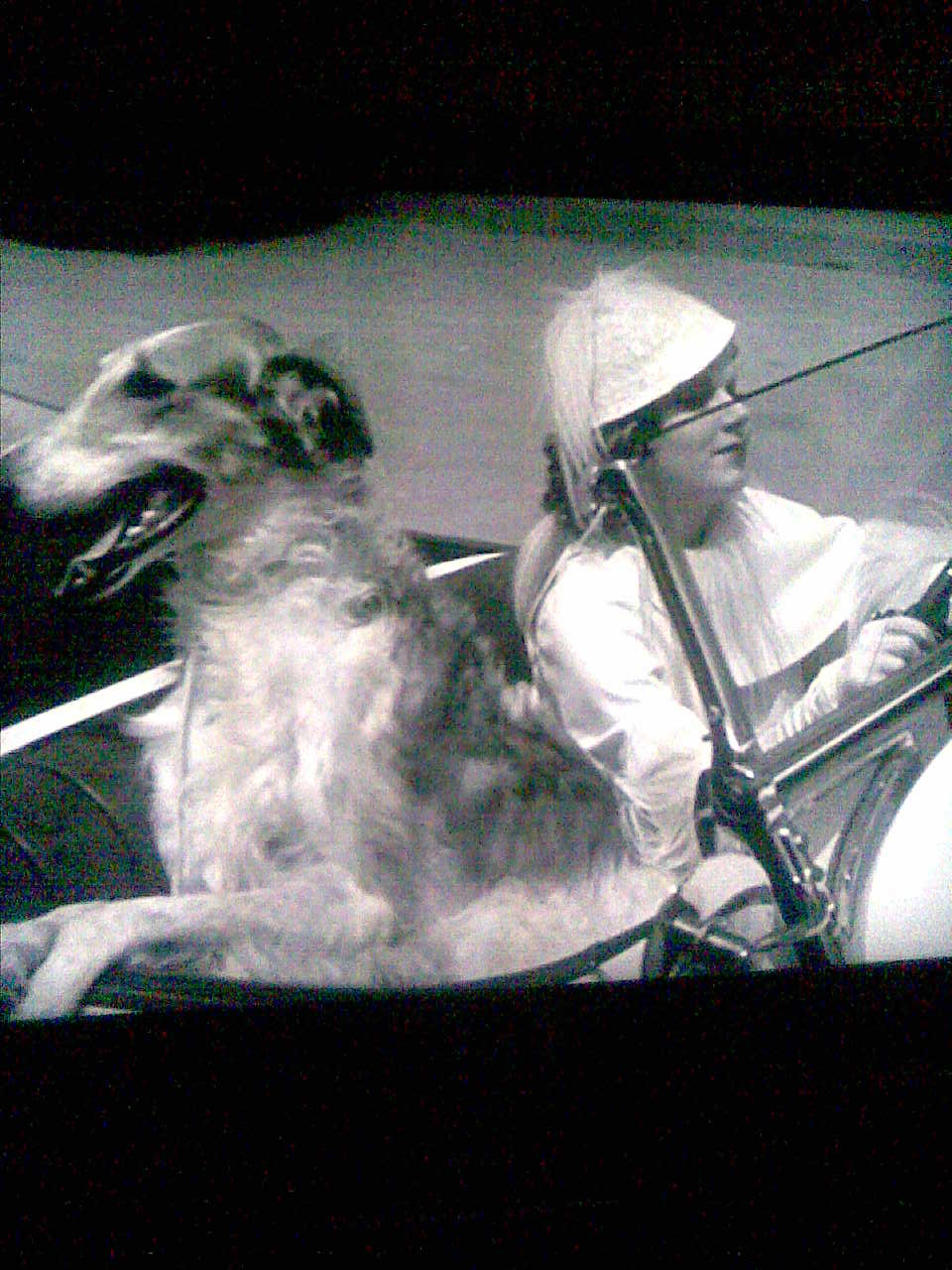
In this way Lil reminds me of Boudu from Jean Renoir's Boudu Saved from Drowning, 1932. Homeless Boudu was taken in by the wealthy but rejected the prospect of change, and the film rejected the idea that Boudu must undergo a transformation or epiphany because of his contact with high society and comfort. Boudu, in the end, is Boudu, and Lil, in the end, is Lil.

09 March 2011
District B13, District 13: Ultimatum, and Taken
Labels:
00s,
Action,
District 13: Ultimatum,
District B13,
Luc Besson,
Mainstream,
Patrick Alessandrin,
Pierre Morel,
Taken,
Trash
Sometimes, while watching Pierre Morel's Taken, I felt a sense of magic. Not about the movie, but about me. I felt like a soothsayer, because I knew what was going to happen next and what was going to be said next (most people will), especially in those beginning thirty minutes, before the daughter is kidnapped, when the characters and their relationships are being set up. I'm not just being an asshole, I'm also being sincere: there was truly an instance in which I mouthed the dialogue along with the actress (Famke Janssen), despite never having seen the film or read the script.
It's clear that Besson now concocts whole films around a handful of attractive and sensational elements, and then hires a screenwriter to attach bullshit and perfunctory story formulas. That's too bad, on the one hand, because I'm speaking about the same Besson who once gave us better films like Le Dernier Combat (which had the courage to be what these films should be - without dialogue; some action movies in the future, I hope, will be more like silent films), The Big Blue, La Femme Nikita ... well you know who Besson is. In District 13: Ultimatum's blu-ray special features there's an interview with Cyril Raffaelli, who had a starring role in both District B13 movies and also served as fight choreographer. In this interview he's describing a moment in which he discussed his idea for a fight scene with Besson, who seemed pleased with what he was hearing. "Just so you know," Besson told him, "in this scene you're going to be holding a Van Gogh."
It's pretty great, on the other hand, because Besson still wants to create cinematic special-worlds, engineered for the delight of an appreciative audience. The action moments of Taken are when Morel shines the most, naturally, and I don't mind the way he emphasizes cinematic propulsion over continuity and logic. He edits purely for the sensational delight of the audience, and a late car chase and fight scene were expressionistic and thrilling rather than realistic and detailed. I don't mind that at all. He succeeds in engaging the audience because he thinks as an audience member seeking escapism, exaggerated emotions ("I don't like realistic movies," a friend once told me, "no, real life is boring enough.") and heightened experiences.
But in my opinion if you're going to exaggerate, and I've said this before, exaggerate all the fucking way. District B13, for example, is indeed a better movie than Taken. Not because it's smarter, no no no, but because it succeeds in capturing the bliss of decadent fantasy. It's as if the French found an abandoned Escape from New York narrative vehicle, hot-wired the thing, and drove it into 21st century Paris. Glorious! The extent of the liberation you allow your imagination is the difference between a low or high-brow film and a middle-brow film, and middle-brow films are worthless in every way except generating ticket sales and quickly becoming forgotten.
This is also why I think District 13: Ultimatum is better than District B13, even though I fell asleep three times while watching it(?!). District B13 used actor Bibi Naceri (who plays the crime lord in the movie) as co-screenwriter, and he and Besson designed some story about, um, revenge and valor, things like that. No co-screenwriter is listed for Ultimatum, and themes are borrowed from the original. Based on the Raffaelli story about the Van Gogh, and the experience of having watched the movie, I'd speculate they made the shit up while they went along, i.e. action took precedence over story. That's how they sometimes work in Hong Kong too, and I've come to appreciate the method. It allows for the superficial elements of the movie to shine, as it should.
General opinion seems to be that District B13 is the better movie. That's probably because its narrative makes more sense, relatively, and so its action has more meaning or impact. Get out of town. The meaning of the District B13 movies is action, and its true themes are punches, kicks, and parkour. Ultimatum clearly better develops these themes. The story, as it is, is ten times more confounding, outrageous, and unbelievable; as it should be. If I'm going to have a conversation with a crazy person, I want to have a conversation with the craziest goddamn person in the city, personally.
It's clear that Besson now concocts whole films around a handful of attractive and sensational elements, and then hires a screenwriter to attach bullshit and perfunctory story formulas. That's too bad, on the one hand, because I'm speaking about the same Besson who once gave us better films like Le Dernier Combat (which had the courage to be what these films should be - without dialogue; some action movies in the future, I hope, will be more like silent films), The Big Blue, La Femme Nikita ... well you know who Besson is. In District 13: Ultimatum's blu-ray special features there's an interview with Cyril Raffaelli, who had a starring role in both District B13 movies and also served as fight choreographer. In this interview he's describing a moment in which he discussed his idea for a fight scene with Besson, who seemed pleased with what he was hearing. "Just so you know," Besson told him, "in this scene you're going to be holding a Van Gogh."
It's pretty great, on the other hand, because Besson still wants to create cinematic special-worlds, engineered for the delight of an appreciative audience. The action moments of Taken are when Morel shines the most, naturally, and I don't mind the way he emphasizes cinematic propulsion over continuity and logic. He edits purely for the sensational delight of the audience, and a late car chase and fight scene were expressionistic and thrilling rather than realistic and detailed. I don't mind that at all. He succeeds in engaging the audience because he thinks as an audience member seeking escapism, exaggerated emotions ("I don't like realistic movies," a friend once told me, "no, real life is boring enough.") and heightened experiences.
But in my opinion if you're going to exaggerate, and I've said this before, exaggerate all the fucking way. District B13, for example, is indeed a better movie than Taken. Not because it's smarter, no no no, but because it succeeds in capturing the bliss of decadent fantasy. It's as if the French found an abandoned Escape from New York narrative vehicle, hot-wired the thing, and drove it into 21st century Paris. Glorious! The extent of the liberation you allow your imagination is the difference between a low or high-brow film and a middle-brow film, and middle-brow films are worthless in every way except generating ticket sales and quickly becoming forgotten.
This is also why I think District 13: Ultimatum is better than District B13, even though I fell asleep three times while watching it(?!). District B13 used actor Bibi Naceri (who plays the crime lord in the movie) as co-screenwriter, and he and Besson designed some story about, um, revenge and valor, things like that. No co-screenwriter is listed for Ultimatum, and themes are borrowed from the original. Based on the Raffaelli story about the Van Gogh, and the experience of having watched the movie, I'd speculate they made the shit up while they went along, i.e. action took precedence over story. That's how they sometimes work in Hong Kong too, and I've come to appreciate the method. It allows for the superficial elements of the movie to shine, as it should.
General opinion seems to be that District B13 is the better movie. That's probably because its narrative makes more sense, relatively, and so its action has more meaning or impact. Get out of town. The meaning of the District B13 movies is action, and its true themes are punches, kicks, and parkour. Ultimatum clearly better develops these themes. The story, as it is, is ten times more confounding, outrageous, and unbelievable; as it should be. If I'm going to have a conversation with a crazy person, I want to have a conversation with the craziest goddamn person in the city, personally.
Subscribe to:
Posts (Atom)